

Explore how local governments manage contracts effectively. Learn best practices, common pitfalls, and how software can ensure public sector compliance.
A public duty
Lawfulness and transparency require demonstrable contract management.
Grip on renewals
Alerts prevent tacit renewals and unwanted terms.
From practice
Gooise Meren shows how central registration works.
Local authorities, education institutions and healthcare organisations operate in an environment defined by reliability, transparency and strict regulation. Yet contract management in the public sector is often fragmented and unclear. Contracts sit in email inboxes and on network drives, knowledge is held by individuals and no one has full visibility of obligations towards suppliers. In this context, public sector contract management becomes a critical success factor for legality, service quality and the efficient use of public funds. Dirk Jan Leppers, Product Manager at ISPnext, puts it succinctly: “Without good contract management, agreements are forgotten and risks remain invisible.”
The case of the Municipality of Gooise Meren shows how much value can be unlocked when you approach contract management in a structured way and support it with digital solutions.
What do we mean by contract management?
Contract management in the public sector goes far beyond storing documents. It is a complete contract lifecycle management public sector process, covering everything from recording agreements and supplier details to monitoring performance, renewals and contract termination.
Public bodies face additional requirements that shape contract governance in the public sector. Examples include public procurement legislation, internal control frameworks, legality requirements and formal accountability to the executive board, council and external regulators. Without professional contract management public sector capabilities, it is difficult to meet these expectations consistently.
As Dirk Jan explains: “Without a central repository there is no overview, who has made which agreements, when a contract expires, what the financial obligations are.” Robust contract governance public sector processes and structured supplier management ensure organisations always know what has been agreed, with whom and under which conditions.
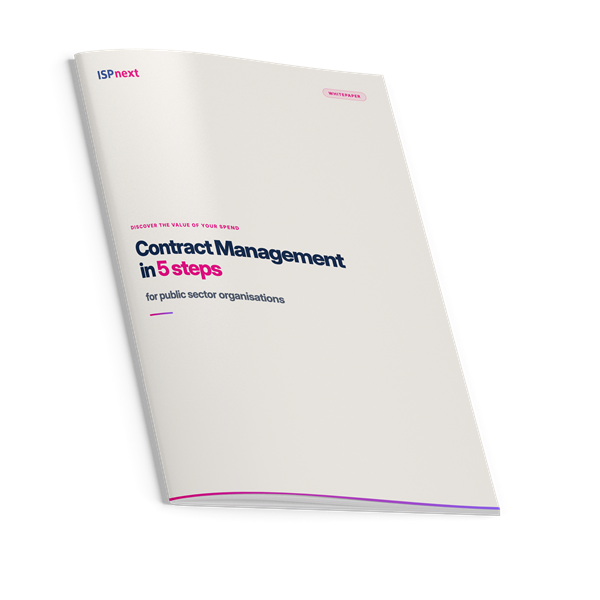
Contract Management in 5 steps for public sector organisations
Discover how to set up contract management that stands up to an audit.
Why local governments need strong contract oversight
For any local government, much of the financial agenda revolves around the legality of public spending and the prevention of unlawful or inefficient spend. Fragmented contract management local government leads quickly to issues such as:
- tacit renewals of contracts that are no longer needed;
- incomplete recording of financial commitments;
- missing information for audits and review by external auditors.
These weaknesses directly affect contract oversight government and increase risk. Without a consistent view of live contracts in a reliable contract register government, councils risk unlawful spending, missed notice periods and limited control over policy goals in areas such as sustainability or social care.
Professional contract management in local government changes this. With reliable data, you can see which contracts are strategically important, where savings are possible and which contract risks should be tackled first.
Case: Gooise Meren as a best practice example
The Municipality of Gooise Meren is a strong real life example of contract governance in the public sector. After the merger of Bussum, Muiden and Naarden in 2016, contracts turned out to be scattered across personal folders, inboxes and outdated systems.
Richard Roosjen and Annemarie Ruiter, process owners for Contract and Supplier Management, started by mapping all contracts. Roosjen recalls: “After that exercise we had to conclude that for two thirds of our suppliers, contracts were not visible at all, for example because they were stored somewhere decentrally or not stored at all.”
This picture is very familiar to Maarten Anbeek, Sales Director Benelux at ISPnext. Around one hundred public institutions use the ISPnext platform for Source-to-Pay, with the contract register government functionality being heavily used in the public domain. “A lack of overview and insight makes proper control of expenditure impossible,” Anbeek states.
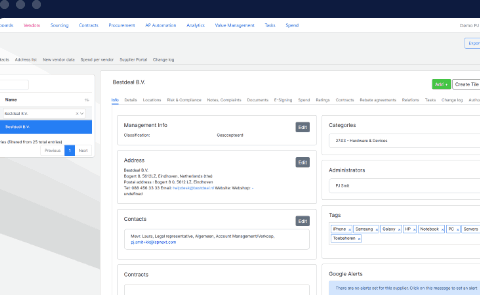
By moving to a central digital contract register government wide, Gooise Meren has gradually brought all contracts together in one system. That central register now underpins spend control, legality and better reporting across the municipality.
Software solutions for public sector contract management
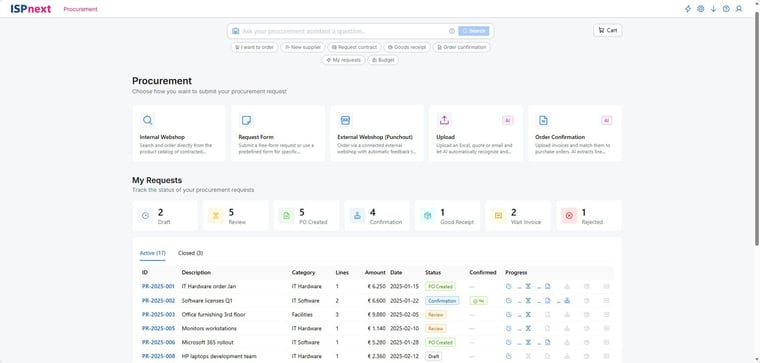
Both the Gooise Meren experience and ISPnext’s broader work with customers show that digitalisation of contract management is essential. With the right contract management software public sector, organisations can:
- store and classify contracts centrally;
- set automatic alerts for notice periods and renewals;
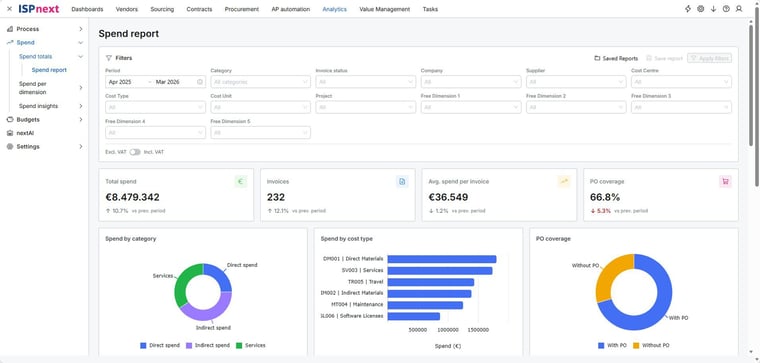
- link contracts to spend, invoices and performance data;
- generate reports for management, audit and external oversight.
This type of contract management software public sector is a key enabler for public sector contract compliance and process optimisation in public procurement.
Dirk Jan emphasises that it is not “just an IT project”: “Digitalising contract management is not an IT project, it is an organisational improvement. You create transparency, strengthen collaboration and build a solid foundation for accountability and policy.”
With integrated supplier management public sector capabilities and shared data between procurement, finance, policy and control, contracts are no longer a black box but an active steering instrument.
“Without good contract management, agreements are forgotten and risks become invisible.”
 Dirk Jan LeppersProduct Manager | ISPnext
Common challenges in public sector contract governance
In practice, the same issues repeatedly surface in contract management government environments. Typical problems in contract governance public sector include:
- contracts being silently renewed even though they are no longer needed;
- missing records of contract terms, end dates and financial obligations;
- contracts not linked to actual expenditure or budgeting;
- unclear ownership, meaning no one is accountable.
These patterns create serious risks for compliance in public contracts. They can result in unlawful spending, missed discounts, lost economies of scale and failure to meet sustainability or quality targets.
Gooise Meren uncovered, for example, a maintenance contract for gas cylinders that had not been used for years, while invoices were still being paid. This shows how quickly errors in contract management government can lead to financial impact if there is no structured monitoring.
Contract governance also plays a pivotal role in procurement and tendering. Agreements made during tenders on quality, service levels and sustainability must be monitored during execution, otherwise compliance in public contracts becomes impossible to demonstrate.
How to implement effective contract management in government
For public bodies looking to strengthen their approach, a practical roadmap based on contract oversight best practices helps. Gooise Meren and ISPnext highlight several critical steps:
Map all contracts
Start with a full inventory. Where are contracts currently stored, in what format and who uses them. Without that baseline, implementing a robust contract register government wide is almost impossible.
Centralise and structure the contract register
Create one controlled environment with clear categories, ownership and approval flows. This is the foundation for smart contract lifecycle management across the organisation.
Assign a contract owner for each agreement
Make one person responsible for usage, quality and evaluation of each contract, including regular supplier meetings. This ensures ongoing contract oversight and real accountability.
Start with the highest risks and volumes
Do not try to fix everything in one go. Focus initially on contracts with the greatest financial or operational risk. This is where the fastest gains in contract oversight best practices can be achieved.
Connect contract management to policy and procurement strategy
Ensure contract information supports policy goals for sustainability, social care or facilities. In this way, contract lifecycle management becomes directly relevant for management and council rather than a purely administrative exercise.
With these steps, contract management in local government develops from a back-office task into a strategic instrument that supports transparency, control and better services for citizens.
Frequently asked questions
Contract management in the public sector is the structured management of all agreements with suppliers, from initial recording through to monitoring and evaluation. It is a full contract lifecycle management approach and a core part of contract governance public sector, ensuring that public organisations retain control over obligations, performance and risk.
Strong contract oversight government helps local authorities demonstrate legality and value for money. A reliable contract register government wide provides visibility of all live agreements, notice periods and obligations. This is essential to maintain compliance in public contracts and to avoid unlawful or inefficient spending.
Modern contract management software public sector centralises contracts, automates alerts and links agreements to actual spend and supplier performance. This supports public sector contract compliance and strengthens supplier management public sector by giving procurement and finance one shared source of truth.
Key contract governance risks in contract management government include missing notice periods, contracts that renew automatically without review, lack of ownership and poor documentation. These weaknesses undermine public sector compliance and can lead to budget overruns, audit findings and reputational damage.
Implementing contract management in local government starts with a baseline inventory and contract register implementation. From there, you define ownership, workflows and reporting, guided by contract oversight best practices. Training and change management ensure that teams actually use the new processes and tools.
The main benefits of contract management are better cost control in government contracts, fewer surprises and greater transparency in the public sector. With structured data and governance, organisations can negotiate better, avoid waste and provide clearer accountability to citizens and regulators.
Effective contract management procurement closes the loop between tender, award and delivery. It ensures that what was agreed in the tender is actually monitored in practice. This strengthens supplier management public sector and supports a more controlled procurement process government wide, from strategy to execution.