
Learn how to track procurement savings, report on performance, and increase the strategic value of procurement within your organisation.
One definition
Definitions agreed up front prevent debate about where a saving comes from.
Recorded as an event
Every initiative gets its own record with a timeline, so results are not lost.
Buy-in from Finance
Procurement and Finance steer on the same figures, so performance gets recognised.
Procurement plays an increasingly strategic role within organisations. Where the focus once lay primarily on transactions and cost reduction, today procurement is expected to contribute actively to broader organisational goals. The value of procurement for overall business performance is significant, yet many procurement teams still struggle with a crucial question: how do you make procurement results genuinely measurable and visible?
As soon as a saving or result is reported, the questions begin immediately: Where does this figure come from, who validated it, and why is it not yet visible in the business results? Without clear definitions and a centralised way of measuring procurement results, discussions arise and achievements may be recognised late, or not at all.
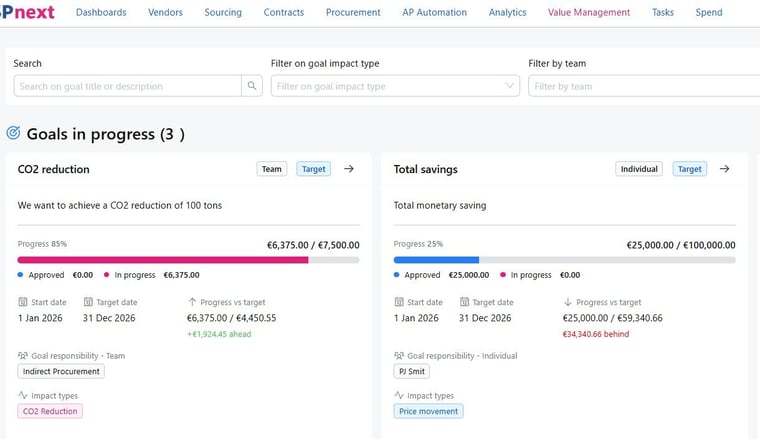
Procurement Value Management provides the structure needed to avoid these issues. By recording every initiative as an “event,†using agreed definitions and a clear timeline, organisations create a single version of the truth that both Procurement and Finance can rely on. This approach increases transparency, strengthens accountability, and ensures the value of procurement becomes visible and measurable across the entire organisation.
How to track Procurement savings
Savings tracking is the structured recording, validation and reporting of all procurement savings. This extends beyond lower prices alone. It also includes volume changes, improved contract conditions and operational efficiencies.
By agreeing in advance how savings are defined and recorded, you prevent discussions afterwards. Savings tracking ensures that all results are objectively measurable and that calculations are always traceable. This makes the results of procurement predictable and credible within the organisation.
Without this structure, savings remain subjective and difficult to validate. With savings tracking, every achievement is firmly substantiated.
Procurement Value Management
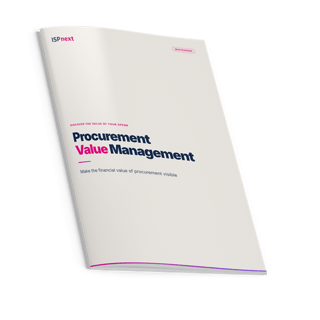
Download the free whitepaper Procurement Value Management and discover how to make the financial impact of your procurement team visible.
Reporting on Procurement performance
The value of procurement goes further than financial results alone. Many important improvements are not directly visible in the business results but have major impact on continuity, risk and strategic objectives. Examples include better contract conditions, reduced liability, more reliable suppliers or more digital processes such as e-invoicing.
These forms of cost avoidance and risk reduction are part of strategic procurement and strengthen the organisation in the long term. The well-known Procurement Iceberg model illustrates that measurable savings are only the tip of the iceberg. Savings tracking helps make the much larger part below the surface visible.
Making Procurement measurable
Many organisations face the same challenges when measuring procurement performance. Common mistakes include:
- unclear or changing definitions;
- spreadsheets without version control;
- savings that are not validated in time;
- results that are not centrally recorded;
- achievements that are lost because they were not registered as an ‘event’.
These errors lead to unclear reports and unnecessary friction between Procurement and Finance. Without a solid method for procurement performance tracking, discussion is inevitable.
Tools for Procurement performance tracking
Finance needs transparency and consistency. With agreed definitions, clear approval flows and verifiable registrations, certainty about the figures arises. Effective procurement team management provides the structure needed to ensure that all activities are recorded and validated in a uniform way.
Procurement reporting becomes far more reliable when supported by robust savings tracking and validation. Finance can see exactly which initiative was registered when, who approved it, and which calculation method was used. This strengthens collaboration, prevents corrections afterwards and ensures that procurement reports can be used more quickly and confidently for managerial decision-making.
“Without clear definitions and central recording, there is always room for discussion.”
 Maarten de RuDirector Product, Partner & Solution Consulting | ISPnext
Registering and communicating savings results
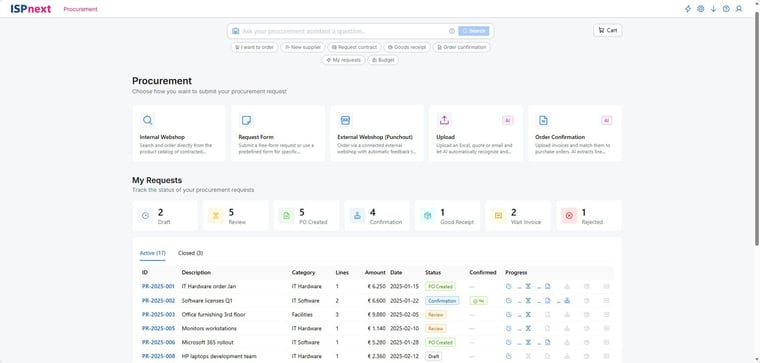
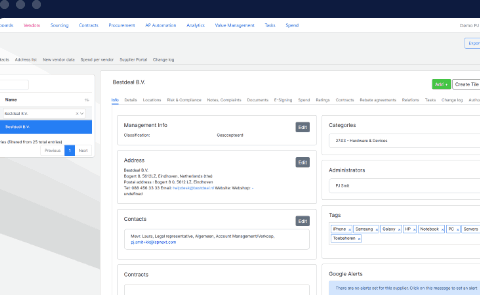
Procurement Value Management connects all initiatives, supplier information and contract data within a single system. As a result, performance is directly linked to factual information, supported by procurement software that brings structure to registration, validation and reporting.
For procurement leaders this provides evidence and justification. For Finance it brings calm and reliability. For the entire organisation it makes the value of procurement visible and shareable.
Benefits of Procurement visibility for the business
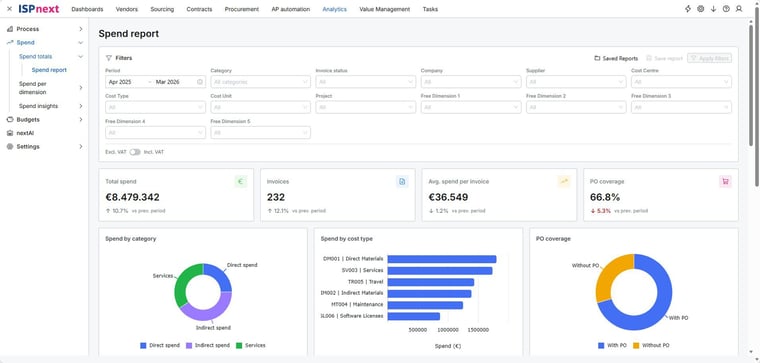
Good reports are clear, consistent and easy to share. Real-time dashboards make both hard savings and strategic indicators visible, such as risk reduction and cost avoidance. This strengthens the value of procurement by showing how purchasing activities directly support organisational objectives.
Effective visibility also depends on measuring procurement performance in a structured and transparent way. A strong procurement performance report shows more than figures, it clarifies the link between actions, outcomes and broader business goals. This makes the contribution of procurement tangible and understandable for senior management and stakeholders.
Frequently asked questions
Savings tracking is the structured recording, monitoring and validation of procurement savings. It makes procurement savings transparent and creates one uniform way of recording them.
Making procurement measurable makes the value of procurement visible. It gives insight into the performance of the procurement team and strengthens its strategic position towards management.
Many organisations miss value types such as cost avoidance, risk reduction and strategic procurement decisions that lower future costs and operational risks.
A strong structure comes from clear definitions, one central savings tracking method and a validation process for savings within a uniform framework for procurement performance tracking.
Value Management provides structure and overview by recording initiatives, validating savings and delivering real time reporting through savings tracking software and a procurement reporting tool.
By agreeing clear savings definitions up front and setting up approval flows in which Procurement and Finance work together, you prevent differences in interpretation and debate.
A good procurement report contains the key procurement KPIs, validated savings, cost avoidance, supplier performance and real time insight into savings.