

Digital invoice processing helps you reduce costs, avoid errors and gain real-time insight into your financial processes and accounts payable management.
What it is
Invoices are recognised, checked and approved digitally, without paper.
What it delivers
Shorter lead times, fewer errors and a current view of outstanding items.
How to start
Begin with the largest invoice flow and expand supplier by supplier.
Efficiency and accuracy are crucial in financial processes. Yet many organisations still struggle with time-consuming and error-prone invoice processing. Digital invoice processing offers a solution by digitising and streamlining this process. But what exactly does digital invoice processing entail? And how can a digital invoice processing solution contribute to smoother processes and better results?
According to John Schouten, Director Product Management at ISPnext, the impact of automation is huge: "With digital invoice processing, organisations can not only save time, but also gain strategic insights that contribute to better decisions."
In this blog, we show you how invoice processing software makes the move to automatic invoice processing easier and what benefits this will bring to your organisation.
What is the purpose of digital invoice processing?
Processing invoices manually poses several challenges, including errors due to incorrect data entry, duplicate payments and slow approvals, putting strain on supplier relationships."Manual processes not only cost time, but also increase the likelihood of errors and financial risks," John stresses. With the move to digital invoices and invoice automation software, companies can address these inefficiencies. This speeds up processes, prevents errors and offers better control over the accounts payable process.
Digital invoice processing aims to:
- Eliminate manual processes and automate invoice processing.
- Improve accuracy and reduce human error.
- Optimise cash flow management by leveraging timely payments and discounts.
- Provide real-time visibility into financial obligations.
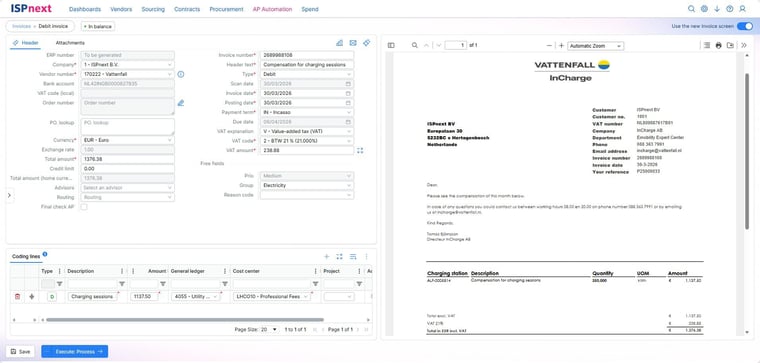
- A digital solution integrates seamlessly with existing ERP systems and provides one central place for invoice data, validation and archiving. This creates a solid basis for control and reporting within the accounts payable process.
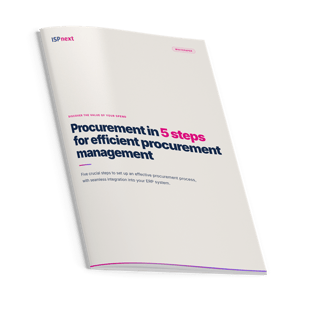
AP Automation in 5 steps
Get practical insights to automate your invoice processing.
What are the benefits of digital invoice processing?
A digital invoice processing solution offers much more than just time savings. It transforms financial administration and improves control over accounts payable management:
- Cost savings arise as manual processing decreases, reducing operational costs. Employees spend less time on repetitive tasks and more on analysis and decision-making.
- Better accuracy is achieved through automated recognition and verification of data. Think of automatic matching of invoices with orders and receipts.
- Efficient cash flow management is possible thanks to faster approvals, allowing you to take advantage of early payment discounts and better manage liquidity.
- Real-time insight into expenses and liabilities offers strategic value. Dashboards provide an up-to-date overview of invoice status, outstanding amounts and payment deadlines.
- Risk management is made easier by automatic checks, e.g. for double entries or discrepancies between invoice and order.
John adds: "With digital invoice processing, you get a grip on your expenses as well as your business processes. You always have a complete overview and can move faster."
What phases are there in digital invoice processing?
An digital invoice processing solution uses smart technologies such as OCR (Optical Character Recognition), machine learning and AI. These are the key stages within the process:
Receiving digital invoices
Invoices are delivered electronically via email, portal or EDI and automatically captured in the system.
Recognising and matching data
The software recognises data such as supplier name, invoice number and amounts, and matches them to corresponding purchase orders, contracts or receipts.
Validation and approval
Information is automatically validated for completeness and correctness. Discrepancies are flagged immediately. The invoice is then digitally forwarded to the appropriate approvers.
Booking and payment
After approval, invoices are automatically booked into the ERP system and included in the payment run. This prevents manual errors and speeds up the payment process.
An additional benefit is the automatic audit trail. Every step in the process is recorded, contributing to transparency and compliance with regulations such as the CSRD or internal audit requirements.
Wondering how Jaarbeurs Utrecht applies contract management within their procurement and financial processes? Read the customer case and discover their approach.
“We finally have a digital archive; everything is now easy to find in one overview.”
 René van AmelsfoortProject Manager IT | Jaarbeurs Utrecht
How do you implement invoice processing software?
If you want to switch to invoice automation software, good preparation is essential:
Analyse your current processes
Map out existing workflows and bottlenecks. Look at error rates, lead times and manual operations.
Involve stakeholders
Collaborate with finance, procurement, IT and compliance. Make sure all stakeholders understand the purpose and benefits.
Choose a flexible solution
Go for software that integrates easily with your ERP system and is scalable to multiple entities or countries.
Perform a phased implementation
Start with a pilot project, e.g. for a specific branch or supplier group. Evaluate and then expand in phases.
When choosing a solution, also consider features such as multi-entity support, automatic validation rules and reporting capabilities for budget control and KPIs.
John advises, "A successful implementation is all about collaboration. It is essential that the solution fits perfectly with the way your organisation works."
Take the step towards more efficient accounts payable management
The future of invoice processing lies in automation. With ongoing developments in invoice automation software, processes are becoming smarter, faster and more accurate. Digital invoice processing ensures a future-proof accounts payable process in which you not only control costs, but also build strategic insight.
By investing in digital invoice processing now, you will immediately benefit from lower costs, fewer errors and better control over your financial processes. Moreover, you give your team space to focus on valuable tasks, such as analysis, risk management and collaboration with suppliers.
Want to discover how ISPnext's digital invoice processing solution can help your organisation? Contact us or request a demo and experience the benefits of automated invoice processing for yourself.
Frequently asked questions
Traditional invoice processing requires manual input, approval and payment, which is error-prone and time-consuming. digital invoice processing automates these steps, making processing faster and more accurate with less human intervention.
Through automated checks, smart data validation and digital approval flows, digital invoice processing helps detect fraudulent invoices and prevent unwarranted payments.
With faster invoice processing and timely payments, suppliers experience less delay and uncertainty. This improves cooperation and can lead to better contract terms.
Yes, modern digital invoice processing solutions can integrate seamlessly with ERP and accounting systems, automatically synchronising data and making financial management more efficient.