
 What Is Invoice Processing? Benefits, Workflow and the Future of AP Automation" width="460" height="307" loading="lazy" decoding="async">
Invoice processing is one of the most important financial processes within any organisation. Every supplier invoice must be received, validated, approved, paid and archived correctly. When this process runs smoothly, organisations gain better control over cash flow, strengthen supplier relationships and reduce financial risk.
Why it matters
Effective invoice processing improves financial visibility, reduces operational costs and manual work, strengthens compliance, helps pay suppliers on time and gives greater control over spending.
The challenge
Many organisations still struggle with approval bottlenecks, manual invoice entry, limited visibility and fragmented processes across departments.
The opportunity
By modernising invoice processing, finance teams can move beyond administration and play a more strategic role in supporting business performance.
However, many finance teams still spend significant time on manual activities such as data entry, invoice matching and chasing approvals. As invoice volumes increase and compliance requirements continue to evolve, these traditional ways of working are becoming increasingly difficult to maintain.
Modern invoice processing combines digital workflows, automation, artificial intelligence and e-invoicing technologies to create a faster, more accurate and more transparent Accounts Payable process.
What is invoice processing?
Invoice processing is the end-to-end process of receiving, validating, approving, paying and storing supplier invoices.
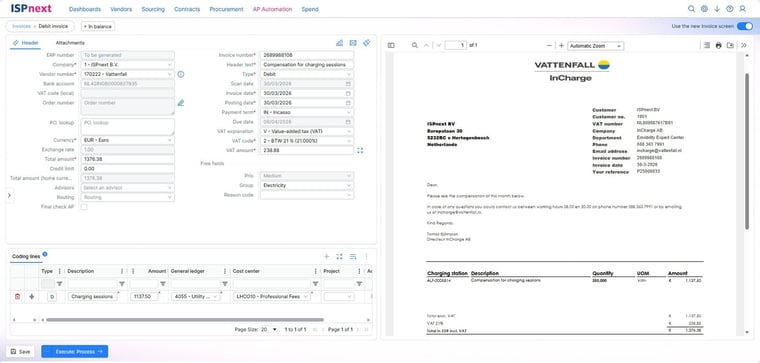
Every invoice follows a journey. It enters an organisation through email, e-invoicing networks, supplier portals or other channels. From there, the invoice must be checked for accuracy, routed to the appropriate stakeholders, approved for payment and ultimately archived for audit and reporting purposes.
While the concept sounds straightforward, invoice processing often involves multiple departments, systems and approval layers. Finance teams must verify that invoice amounts are correct, ensure that goods or services have been delivered and confirm that spending aligns with organisational policies.
Without clear processes and controls, invoice processing can quickly become a source of inefficiency. Delays in approvals may impact supplier relationships. Errors can lead to duplicate payments or compliance issues. A lack of visibility can make it difficult to understand outstanding liabilities and cash flow commitments.
As a result, invoice processing has evolved from a purely administrative activity into a key component of financial governance and operational efficiency.
Why invoice processing matters
The impact of invoice processing extends far beyond Accounts Payable. A well-managed process contributes to better decision-making, stronger supplier relationships and improved financial control.
While invoice processing is often viewed as an Accounts Payable activity, many of the factors that influence invoice efficiency originate earlier in the purchasing cycle. Supplier data quality, contract agreements and procurement decisions all affect the speed, accuracy and control of invoice processing. Organisations that connect these processes create a stronger foundation for operational efficiency and financial governance.
Beyond efficiency gains, effective invoice processing also strengthens financial governance by creating greater transparency, accountability and auditability across the payment lifecycle.
Better supplier relationships
Every supplier wants to be paid accurately and on time. When invoices become stuck in approval workflows or disappear in overloaded email inboxes, supplier trust can quickly deteriorate. Repeated payment delays can damage relationships and may even affect future contract negotiations.
Efficient invoice processing creates a more reliable payment experience and helps organisations become a preferred customer.
Greater financial visibility
Invoices represent future cash outflows. The faster invoice information is captured and validated, the easier it becomes to understand financial obligations and forecast future spending.
Real-time visibility allows finance teams to make more informed decisions and identify potential risks before they become larger issues.
Stronger compliance
Organisations face increasing regulatory and audit requirements. A transparent invoice process provides a complete audit trail of approvals, exceptions and payments. This strengthens internal controls, improves audit readiness and helps organisations meet increasing compliance and reporting requirements.
Improved efficiency
Manual invoice handling is time-consuming. When repetitive tasks are automated, finance professionals can spend less time on administration and more time on analysis, planning and business support.
The 7 stages of invoice processing
Although every organisation has unique requirements, most invoice processing workflows follow seven core stages.
Invoice receipt
The process begins when an invoice enters the organisation. Invoices may arrive through email, supplier portals, EDI connections, e-invoicing networks such as Peppol or traditional paper documents.
The challenge is ensuring that every invoice is captured consistently, regardless of its source.
Data capture
Once received, invoice information must be extracted and recorded. Typical invoice data includes supplier information, invoice number, invoice date, tax details, payment terms and the invoice amount.
In manual processes, this often involves data entry. Modern solutions can automatically capture and classify invoice data.
Validation
Before an invoice progresses through the workflow, it must be validated. This includes verifying supplier details, tax information and invoice completeness, checking for duplicate invoices and confirming pricing accuracy.
Validation reduces the likelihood of processing errors and payment disputes.
Matching
Matching is one of the most important financial controls. Invoices are compared against purchase orders, goods receipts, contracts and service confirmations, often through three-way matching.
When information matches correctly, invoices can move forward automatically. Exceptions are flagged for review.
Approval
Invoices are routed to the appropriate approvers. Approval workflows vary by organisation but often include budget holders, department managers, procurement teams and finance teams.
Clear approval processes help ensure spending remains controlled and accountable.
Payment
Following approval, invoices are scheduled for payment. Effective payment management helps organisations avoid late fees, maintain supplier confidence, optimise cash flow and capture early-payment discounts.
Archiving and reporting
The final stage involves storing invoice records and supporting documentation. This information supports audits, compliance requirements, financial reporting and spend analysis.
An accessible archive also helps organisations respond quickly to future information requests.
Common invoice processing challenges
Manual data entry
Entering invoice information by hand is time-consuming and prone to human error.
Approval bottlenecks
Invoices often sit in approval queues waiting for action.
Limited visibility
Without process visibility, finance teams spend valuable time chasing information.
Duplicate payments
Duplicate invoices remain a common issue in manual environments, and they are closely related to the wider risk of invoice fraud.
Growing compliance requirements
Finance teams increasingly need processes that support transparency, traceability and accurate reporting.
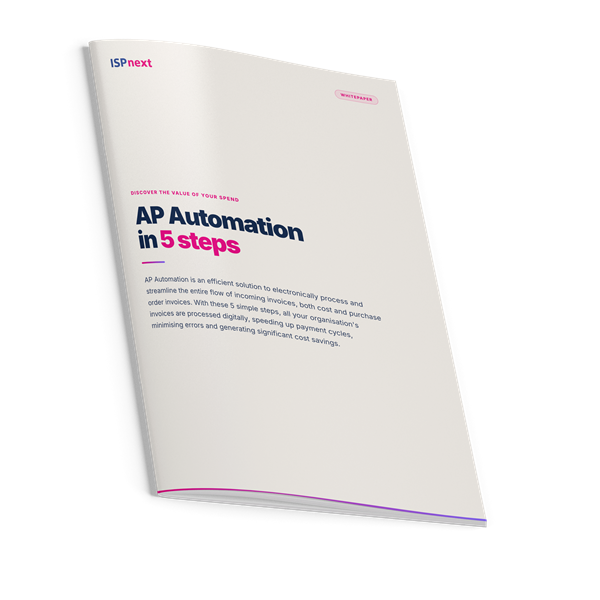
AP Automation in 5 Steps
Manual invoice processing often creates bottlenecks, limited visibility and unnecessary administrative effort. Discover how organisations modernise their invoice processing workflows and improve efficiency with a structured AP Automation approach.
Best practices for efficient invoice processing
Successful invoice processing is not only about technology. It also requires standardised processes, reliable data and clear ownership throughout the organisation.
Standardise invoice intake
Invoices often arrive through multiple channels. Standardising invoice intake reduces complexity and ensures every invoice follows the same workflow from receipt to payment.
Automate approval workflows
Manual approval chains are one of the biggest causes of processing delays. Automating approval workflows enables invoices to be routed directly to the appropriate stakeholders, reducing bottlenecks and improving accountability.
Improve supplier data quality
Accurate supplier information is essential for efficient invoice processing. Duplicate supplier records, outdated data and missing VAT information can create errors, delays and compliance risks.
Monitor invoice processing KPIs
Finance leaders should regularly measure performance using KPI dashboards and metrics such as:
- Average processing time
- Invoice approval cycle time
- First-time match rate
- Number of exceptions
- Percentage of invoices processed automatically
Prepare for e-invoicing
As governments continue introducing electronic invoicing requirements, organisations should ensure their invoice processing environment is capable of supporting structured invoice formats and future compliance requirements. When evaluating solutions, read how to choose the right e-invoicing platform.
Manual vs digital invoice processing
| Area | Manual processing | Digital processing |
|---|---|---|
| Data entry | Manual | Automated |
| Invoice visibility | Limited | Real-time |
| Approval speed | Slower | Faster |
| Error risk | Higher | Lower |
| Reporting | Manual | Automated |
| Compliance | More effort | Better control |
Digital invoice processing uses technology to automate and streamline workflows. The goal is not simply to work faster, but to improve consistency, transparency and control.
How AI is transforming invoice processing
Artificial Intelligence is changing the way finance teams manage invoices.
Traditional automation relies on predefined rules. AI adds another layer of intelligence by learning from previous transactions and continuously improving recognition accuracy. Read more about accelerating invoice processing with AI.
Examples include:
- Intelligent invoice recognition
- Automated data extraction
- Anomaly detection
- Smart approval routing
- Exception handling
Instead of spending time entering data manually, finance teams can focus on reviewing exceptions and supporting strategic business decisions.
Invoice processing vs e-invoicing
These terms are often used interchangeably, but they refer to different concepts.
| Invoice processing | E-invoicing |
|---|---|
| Complete workflow from receipt to payment | Method of exchanging invoice data |
| Includes validation, approval and payment | Focuses on invoice transmission |
| Internal business process | External exchange standard |
| Applies to every invoice | Increasingly driven by regulations |
An organisation can process invoices digitally without using e-invoicing. Similarly, an organisation may receive e-invoices but still have manual approval processes.
Why e-invoicing is reshaping invoice processing
The growing adoption of e-invoicing is changing how organisations process invoices.
Unlike traditional PDF invoices, e-invoices contain structured data that can be interpreted automatically by financial systems. This reduces the need for manual data entry and allows invoice information to move seamlessly through validation, matching, approval and reporting workflows.
Across Europe and beyond, governments are increasingly introducing e-invoicing initiatives to improve tax transparency, reduce fraud and simplify reporting obligations. Countries such as France, Belgium, Poland and Italy have already introduced regulations that encourage or require organisations to exchange invoice data electronically.
For finance teams, this creates both a challenge and an opportunity. On the one hand, organisations must adapt their processes and systems to meet evolving compliance requirements. On the other hand, e-invoicing provides a foundation for greater automation and process efficiency.
Benefits include:
Faster invoice processing
Increased data accuracy
Lower administrative costs
Improved auditability
Stronger fraud prevention
Better visibility into financial obligations
As electronic invoicing becomes more widely adopted, invoice processing is evolving from a document-driven activity towards a fully data-driven process. Organisations that invest in digital invoice processing capabilities today will be better positioned to support future compliance requirements and create a more scalable finance operation.
From invoice processing to Source-to-Pay visibility
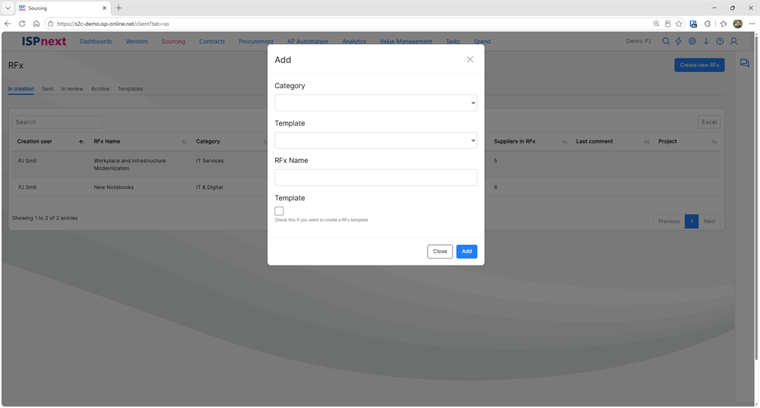
The most mature organisations no longer view invoice processing as an isolated Accounts Payable activity. Invoice processing delivers the greatest value when it is connected to procurement, supplier management and contract data. This enables organisations to move beyond reactive invoice handling and towards proactive spend control, stronger compliance and end-to-end Source-to-Pay visibility.
Invoice information connects directly with:
- Procurement activities
- Supplier relationships
- Contract obligations
- Budget management
- Financial reporting
When these areas operate in silos, organisations struggle to achieve full visibility into spending commitments, supplier performance and contractual obligations. When they are connected, invoice data becomes a valuable source of insight that supports more informed decision-making.
While invoice processing is often managed within Accounts Payable, many invoice-related issues originate earlier in the purchasing lifecycle. Procurement decisions, supplier information and contract compliance all influence invoice quality, processing speed and financial control.
Connecting these functions helps organisations strengthen governance, reduce risk and gain greater visibility across the entire Source-to-Pay lifecycle.
What this means for finance leaders
For CFOs
Efficient invoice processing provides CFOs with better visibility into liabilities, stronger control over approval processes and a more reliable foundation for cash flow planning. It also supports financial governance by improving transparency, accountability and auditability across the organisation.
For finance managers
Automation reduces administrative effort and creates more time for analysis, planning and business partnering.
For procurement leaders
Invoice data provides valuable insight into supplier behaviour, contract compliance and spending trends.
Final thoughts
Invoice processing sits at the heart of every finance organisation.
While many businesses still view it as an administrative necessity, finance leaders increasingly recognise its role in supporting control, compliance and financial performance.
Efficient invoice processing helps organisations improve supplier relationships, strengthen governance, gain visibility into spending and support better decision-making.
As automation, AI and e-invoicing continue to reshape financial operations, invoice processing is becoming part of a broader Source-to-Pay strategy. By connecting procurement, supplier management, contracts and Accounts Payable, organisations can create greater visibility, stronger control and a more scalable foundation for future growth.