
.png?width=460&height=307&name=Maarten%20de%20Ru--2%20(1).png)
Discover the growth path from traditional invoice processing to intelligent procurement strategies. Digitise processes and optimise cost control with Source-to-Pay.
It starts at the invoice
Automated invoice processing produces the data everything else rests on.
From data to steering
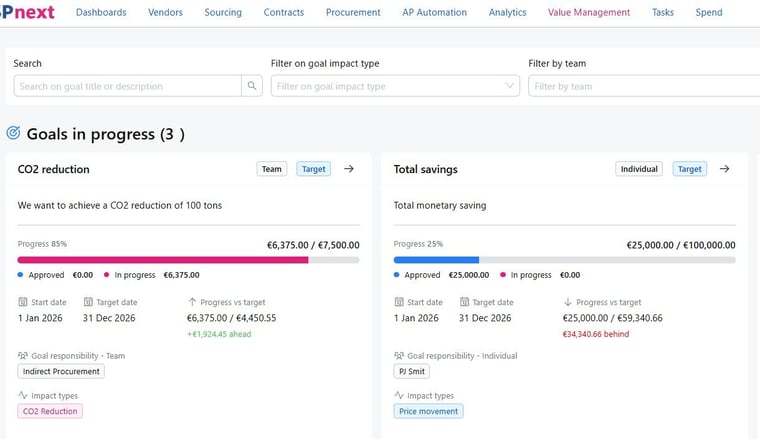
Insight into spend makes better supplier agreements possible.
Purchasing and finance together
Both departments work from the same figures instead of separate overviews.
A lot of data is collected during the automatic processing of purchase invoices. The AP Automation invoice processing solution can thus serve as the gateway to intelligent purchasing since all that data provides deep insights into spending, which can be used to optimise contracts and processes.
The growth path toward Source-to-Pay is open to any organisation.
Read the entire interview below:
Digitisation of invoice processing as a basis for Source-to-Pay
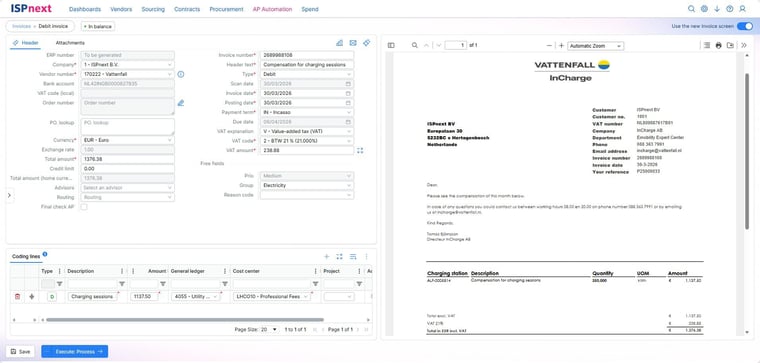
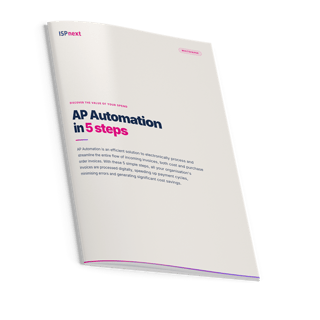
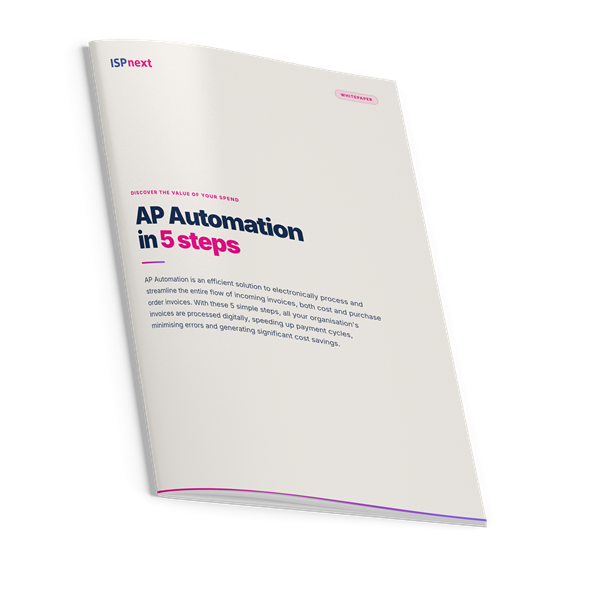
Technology that digitises the supplier billing process provides the foundation for the growth model toward Source-to-Pay. AP Automation software recognises purchase invoices from all suppliers and stores important data such as invoice number, amount, supplier, nature of order, and so on. A workflow starts for approval of the invoice. It then enters the ERP system and is made payable. Just one application ensures an efficient process, control, timely payments and fewer administrative actions.AP Automation in 5 steps
Download our white paper AP Automation in 5 Steps and learn how to transform your accounts payable processes. Discover practical steps to save time, reduce errors and increase control over your invoice processing. Start streamlining your AP processes today.
Understanding the expenses
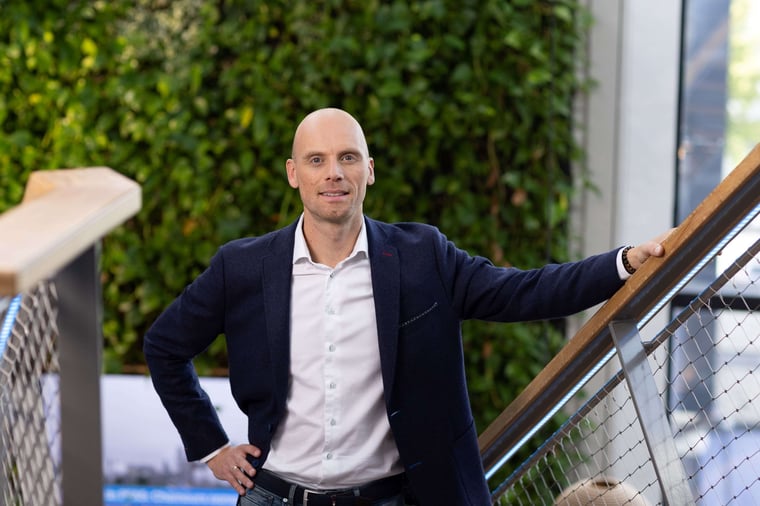
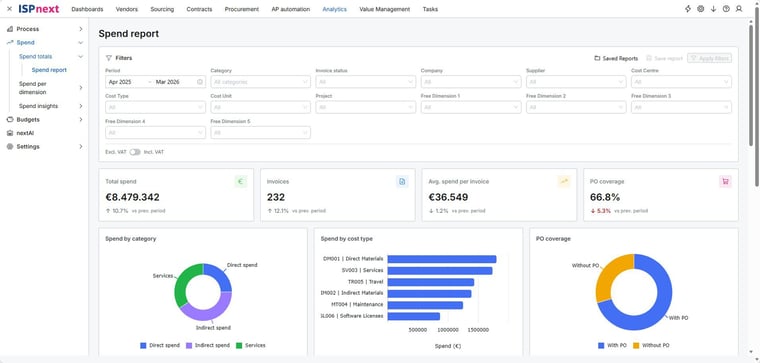
A current trend within organisations using AP Automation is turning all those transactions into structured data, observes Maarten de Ru, Director Product, Partner & Solution Consulting at ISPnext. "All the invoices together provide a huge amount of data. You can use these to increase the understanding of your purchasing and make better decisions based on them. In doing so, you eliminate a lot of risk and - not insignificantly - you save costs."
He compares it to a chequebook register, but in a commercial sense. "It is imperative for an organisation to know what money is being spent on, by whom and to which vendors. You can visualise that in dashboards. Then follow-up questions arise, such as: Who are my biggest suppliers? What is the state of security of supply? Are closed contracts being used at all?"
Collaboration Procurement and Finance
Large organisations sometimes have as many as 20 to 30 suppliers for office supplies, for example. "If you cut that number down to one or two contracted suppliers, it will yield better terms and more competitive purchasing prices."
Moreover, according to De Ru, it often happens that a good procurement contract remains unused in practice because it, for example, is not known in the organisation or because people continue to work with their regular supplier. "Tackling such problems requires intensive cooperation between Procurement and Finance. Understanding spending triggers that collaboration," which he knows from experience.
Optimising contracts
A follow-up step to insight is order. In this phase of the growth model, maturities and SLA agreements of all current contracts are established and transparent to all, as are compliancy requirements in the areas of certification, sustainability and corporate social responsibility. "The objective here is that you start ranking the importance of contracts and their risks," De Ru explains. "You can monitor, for example through a link with Graydon, the financial health of your suppliers. Supplier continuity can threaten your primary business process. You have to try to get ahead of that."
“Thus the circle is complete: from transaction to intelligence and back to transaction again.”
 Maarten de RuDirector Operations | ISPnext
Coming full circle
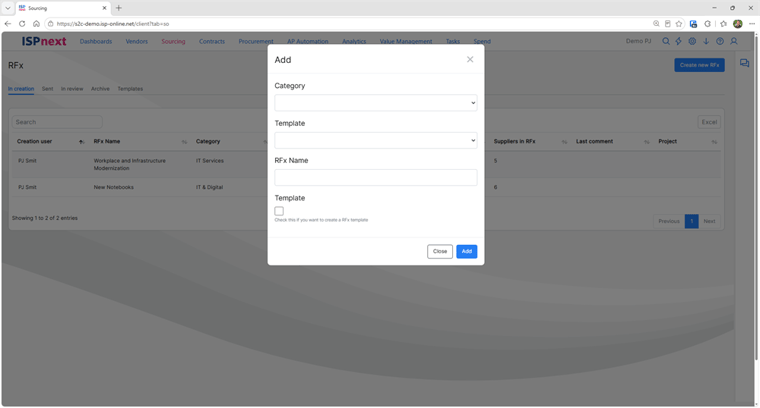
Every employee in an organisation is a spender and should preferably make orders through the online store function of the Source-to-Pay platform. By making all contracts available within the platform in the ordering process, the amount of orders off-contract is kept to a minimum. "With new suppliers, you can easily request quotes from the Source-to-Pay platform according to a set pattern and extract the data you deem important. You document that the supplier accepts your procurement terms and conditions, tests for certifications and so on."
All invoices that come in through the established purchase orders and contracts go back into the automatic invoice processing (AP Automation) process. "Thus, the circle is complete: from transaction to intelligence and back to transaction again. In this process, the intelligence of the data continues to improve."
Resilient and agile
Maarten de Ru sees Source-to-Pay as a growth model: from mere transactions to insight and optimal procurement. "Expenses are the business area you can manage most directly. It's easier to cut expenses than to try to sell an extra euro."
The benefits of Source-to-Pay are obvious: increased process efficiency, better purchasing decisions based on intelligent purchasing data, cost savings and reduction of supplier risks. More importantly, in his view, insight and intelligence into the procurement process makes an organisation more resilient. "The importance of this has become clear in recent years. Until recently, we could scarcely imagine experiencing a pandemic or war. Now, in relation to suppliers, it is suddenly a realistic scenario. You have to be able to act quickly with good alternatives. You create that agility when you use current, relevant data smartly."
This article was created in collaboration with Executive Finance.