
Streamline your tender process with Tenpu: an all-in-one procurement software for digital tendering, RFPs, and public sector bids.
Tender and contract
Tenpu covers the tender, ISPnext the contract that follows from it.
No retyping
After award the contract lands in the system at the touch of a button.
A signal back
An expiring contract becomes the starting point of the next tender.
Tenpu and ISPnext are joining forces to help public organisations make their procurement and tendering processes fully digital and compliant with a seamless transition to contract management.
‘Linking Tenpu's tendering platform with ISPnext's Source-to-Pay platform creates a single integrated solution that supports the entire process from tendering to contract management, contract administration and supplier management,’ says Dirk Jan Leppers, Product Manager.
Tenpu and ISPnext connect tendering with contract management
In 2026, public organisations will have a significant opportunity to improve efficiency. Tenpu and ISPnext are enabling a seamless transition from the tendering process to contract and supplier management. “There’s really no need to retype data anymore.” According to Mark Bottinga, the link between Tenpu’s tendering platform and ISPnext’s Source-to-Pay platform “really addresses a pain point within the public sector”. Mark should know, he spent more than ten years working as a purchaser in the public domain.
“In practice, processes are often highly fragmented. Procurement handles the tender, but then the contract goes to department B, and the execution may well happen in cooperation with departments C and D. Information is then recorded in different systems. Contract terms are manually retyped, which is of course time-consuming and prone to error. Valuable information is lost as a result. It can really be done better.”
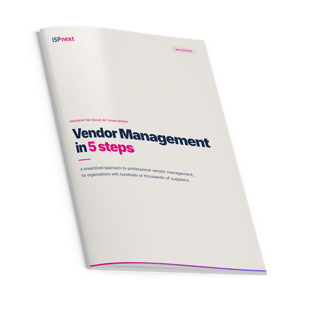
Whitepaper: Contract Management in 5 steps
Want to get a grip on contracts and reduce risks? Discover in five steps how centralisation and automation can streamline your contract process. Download the whitepaper.

Start of Tenpu
Obstacles within the tendering domain led him (and co-founder Valentin Zberea) to launch Tenpu in 2023. The company develops innovative software designed to ensure ease of use, transparency, and compliance with laws and regulations for public-sector tenders. The platform covers every stage of a tender: from preparation and publication to the final supplier selection.
A new feature is the integration with ISPnext’s platform. “This allows follow-up steps in the contract-to-pay process—such as drafting and digitally signing contracts, to be carried out easily, ensuring everything continues seamlessly.”
Adding contract management
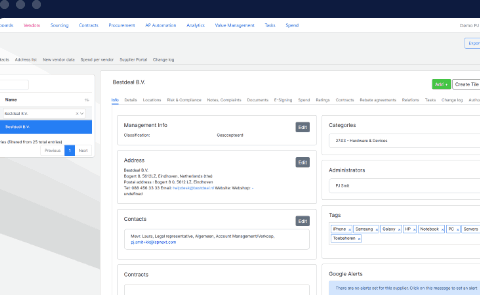
“After the award, our platform handles supplier onboarding and the recording of the final agreement,” explains Dirk Jan. “All relevant information from Tenpu is collected and automatically transferred to the contract file in ISPnext. You then supplement it with specific terms and pricing agreements, and initiate the actual signing process.”
The system automatically issues notifications, for example, when underlying certificates or contract terms expire. Dirk Jan: “You can store supplier assessments and gather KPI scores. The platform makes it possible to analyse spend to monitor contract utilisation and ensure everything stays within procurement thresholds. This helps ensure procurement remains compliant, with maximum transparency, control, and efficiency.”
Best-of-breed
“Our combined solution makes it possible to digitally support every step of the procurement process,” says Mark. “It is truly a best-of-breed solution. We specialise in the sourcing process for public organisations, while ISPnext is a specialist in contract management. There is no better solution within the public domain, absolutely not.”
And this matters for more than 2,800 organisations in the Netherlands that are required to publicly tender their assignments. In addition to various levels of government, this includes education, healthcare, and other public services. All these contracts represent no less than 14% of gross domestic product. “It’s significant, yes. Across Europe, even 250,000 organisations are required to tender. But for now, we are focusing on the Dutch market. Even there, substantial efficiency gains can be achieved. High-quality public services depend on well-executed and efficient tenders, but in practice these processes are often very outdated. There is still a world to be gained.”
“Thanks to our partnership with Tenpu, we can connect the tendering domain directly to our Source-to-Pay platform.”
 Dirk Jan LeppersProduct Manager | ISPnext
Front end and back end
According to Dirk Jan, many organisations want to combine sourcing and supplier management. “Tenpu has often been asked whether they can also handle the back end after the tender, the contract and supplier management. At the same time, we’ve often been asked whether we have a solution for the front end, the tendering phase. But that was not our area of expertise. Or rather, it wasn’t, because with this integration, we can now offer a suitable solution.”
“Tenpu is truly a specialist within the public domain,” he continues. “Tendering involves specific rules, special forms, and audits afterwards. It is public money, after all, so choices must be properly justified. The tender contains binding information that forms the foundation of the final contract. Our platform completes and structures the contract file. We create a lasting connection between all information from the tender and the execution of the agreed terms.”
Contract registration at the touch of a button
From experience, Mark knows that the purchaser is not necessarily the same person as the contract manager. “The latter often must extract information from folders full of PDF files. In addition to transferring data, often manually, from one system to another, information is simply difficult to find. But now, our users can simply click the ‘Generate Contract’ button within Tenpu and view all information clearly in one system, including notifications. As an organisation, you want not only to comply with tendering rules, but also to ensure proper follow-up of procurement. The back end must also be properly handled.”
A complete cycle
The ISPnext platform signals expiring terms in good time. “For a European tender, that term is longer than for a Dutch tender,” says Dirk Jan. “Such a notification is essentially the trigger for a new tendering round. You return to Tenpu to initiate a new market consultation and tender.”
“It’s a cyclical process,” Mark adds. “And it may seem obvious that the end of the contract period and the available financial scope are always visible. But believe me, that is extremely valuable information, especially within the public sector. This approach ensures that procurement is not only efficient but also lawful.”
This article was made possible in part by magazine Deal!.
Frequently asked questions
The integration enables public organisations to carry out the entire process, from tendering to contract management, within a single digital chain. Tenpu supports the preparation, publication and management of tenders. After awarding the contract, all relevant data is automatically transferred to ISPnext, where a linked contract is created immediately. Organisations can then carry out all contract management processes within ISPnext, such as recording agreements, monitoring contract terms and following up on obligations.
The solution ensures maximum control and transparency because all steps are carried out centrally, digitally and uniformly. All tender and contract data is recorded consistently and is easy to consult. This helps organisations to demonstrate that they are working in compliance with relevant laws and regulations. In addition, the risk of errors is reduced because information is transferred automatically, ensuring a reliable and transparent process.
After awarding the contract, ISPnext offers extensive functionalities for Vendor Management. Suppliers can be easily onboarded with all necessary data, documents and approval steps. During the contract period, organisations can continuously assess suppliers by setting KPIs, performing performance measurements and recording supplier assessments. This helps to improve collaboration, quality and risk management.
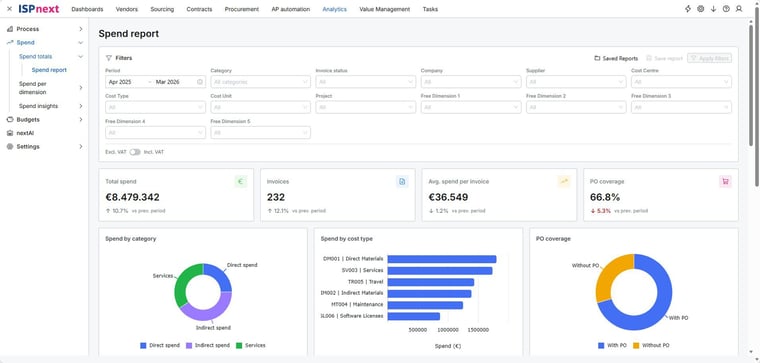
ISPnext's Spend Analytics solution provides organisations with real-time insight into expenditure, trends and compliance with contractual agreements. By bringing together data from tenders, contracts and supplier performance, organisations can make data-driven choices. This clarifies where savings opportunities lie, how contracts are being utilised and where risks or deviations arise. This supports strategic procurement policy and ensures that procurement remains compliant.