

Many organisations use Source-to-Pay (S2P) and Procure-to-Pay (P2P) interchangeably. While the two processes are closely related, they are not the same. Understanding the difference is important for procurement leaders, finance teams and decision-makers who are looking to improve spend visibility, strengthen supplier relationships and gain greater control over organisational spending.
The confusion
Both Source-to-Pay and Procure-to-Pay cover procurement activities, involve suppliers and contribute to financial control. This overlap often makes it difficult to distinguish between the two approaches.
The key difference
Procure-to-Pay focuses on the operational process from purchasing goods or services through to supplier payment. Source-to-Pay covers the entire supplier lifecycle, starting much earlier with sourcing, supplier selection and contract management.
Why it matters
The distinction influences how organisations manage suppliers, monitor contracts, control spending and identify opportunities for cost savings and efficiency improvements.
Why organisations confuse Source-to-Pay and Procure-to-Pay
Procurement processes have evolved significantly over the past decade. Organisations are increasingly adopting digital tools to manage sourcing, contracts, procurement and Accounts Payable activities. As new technologies and platforms have emerged, terminology has become more complex.
Many procurement professionals are familiar with the term Procure-to-Pay because it has traditionally been associated with purchasing and invoice processing. Source-to-Pay is a broader concept that builds on these activities by incorporating strategic sourcing and supplier management processes.
As a result, organisations often use the terms interchangeably, even though they address different stages of the procurement lifecycle.
Understanding this distinction helps businesses determine where process improvements will have the greatest impact and how they can achieve greater visibility across spending and supplier activities.
For many mid-market organisations, understanding this distinction is becoming increasingly important as procurement and finance processes grow in complexity and strategic value.
What is Procure-to-Pay (Purchase-to-Pay)?
Procure-to-Pay (P2P) refers to the process that starts when a purchase is requested and ends when the supplier has been paid. It is also known as Purchase-to-Pay.
The objective of Procure-to-Pay is to ensure purchases are made efficiently, approved correctly and paid according to agreed terms.
A typical Procure-to-Pay process includes:
- Purchase requisition
- Purchase order creation
- Goods or service receipt
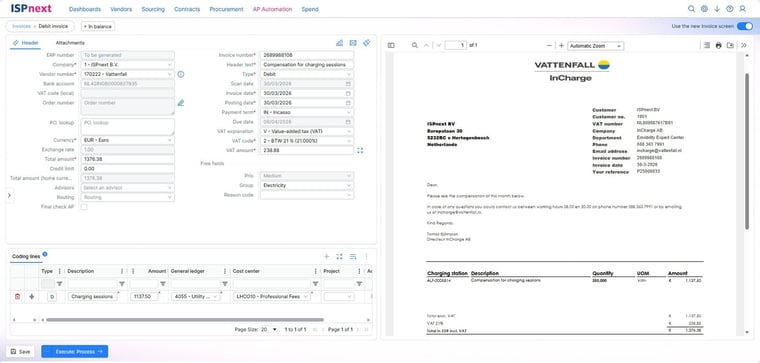
- Invoice processing
- Payment execution
The process focuses heavily on operational efficiency and financial control. By standardising purchasing and payment activities, organisations can reduce errors, streamline approvals and improve compliance with procurement policies.
For many organisations, Procure-to-Pay serves as the foundation of procurement operations.
Procure-to-Pay workflow
- 1 Purchase Request
- 2 Purchase Order
- 3 Goods or Service Receipt
- 4 Invoice Processing
- 5 Payment
This model works well for organisations seeking better control over purchasing and Accounts Payable activities.
What is Source-to-Pay?
Source-to-Pay (S2P) expands upon Procure-to-Pay by including all activities that take place before a purchase order is created.
Instead of focusing only on purchasing and payment, Source-to-Pay covers the entire journey from supplier identification through to supplier payment and performance management.
A typical Source-to-Pay process includes:
- Supplier discovery and/or onboarding
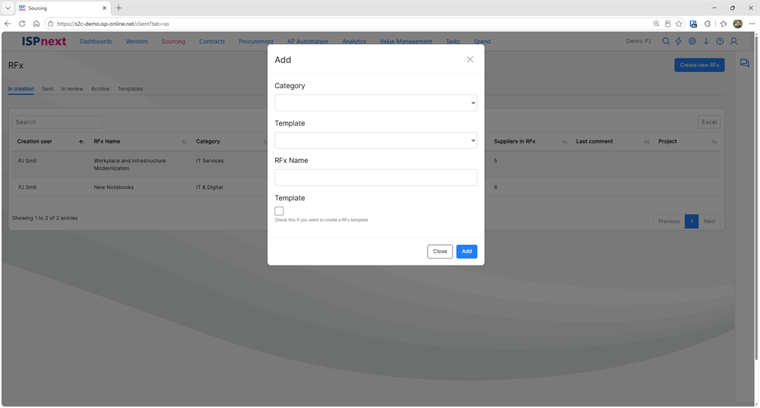
- Strategic sourcing
- Supplier evaluation
- Contract Lifecycle Management
- Purchase Request, Order & Receipt
- Invoice processing
- Supplier payment
By connecting these activities, organisations gain visibility across the complete supplier lifecycle.
This broader approach enables procurement teams to make more informed sourcing decisions, improve supplier relationships and strengthen governance across procurement and finance operations.
Modern Source-to-Pay software increasingly uses AI to analyse procurement and finance data, identify patterns and bring relevant exceptions or opportunities to the attention of users. The value does not come from AI alone, but from applying those insights within connected sourcing, supplier, contract and finance processes.
Source-to-Pay workflow
Sourcing & contracting
- 1 Supplier Discovery
- 2 Strategic Sourcing
- 3 Supplier Selection
- 4 Contract Management
Procure-to-Pay
- 5 Purchase Request, Order & Receipt
- 6 Invoice Processing
- 7 Payment
Source-to-Pay enables organisations to move beyond transaction management and focus on strategic value creation.
Source-to-Pay vs Procure-to-Pay: Key differences
At first glance, Source-to-Pay and Procure-to-Pay may appear very similar. However, the scope and business objectives differ significantly.
| Area | Procure-to-Pay | Source-to-Pay |
|---|---|---|
| Scope | Purchasing to payment | Sourcing to payment |
| Supplier Selection | Not included | Included |
| Strategic Sourcing | Not included | Included |
| Contract Management | Limited | Included |
| Vendor Management | Limited | Included |
| Primary Objective | Transaction efficiency | End-to-end spend control |
| Visibility | Operational | Strategic |
| Focus | Procurement execution | Supplier lifecycle management |
Many organisations assume Source-to-Pay and Procure-to-Pay are competing approaches. In reality, Procure-to-Pay is typically one component of a broader Source-to-Pay strategy.
This misconception often leads organisations to focus exclusively on purchasing efficiency while overlooking opportunities within sourcing, supplier management and contract governance. As procurement becomes more strategic, these upstream activities increasingly influence business results.
The easiest way to understand the difference is to view Procure-to-Pay as a subset of Source-to-Pay. Every Source-to-Pay strategy includes Procure-to-Pay processes, but not every Procure-to-Pay process includes Source-to-Pay capabilities.
When Procure-to-Pay is enough
Not every organisation requires a full Source-to-Pay strategy immediately.
Procure-to-Pay can provide significant value when:
- Supplier networks are relatively simple
- Sourcing activities are limited
- Procurement volumes are manageable
- Contract complexity is low
- The primary goal is improving operational efficiency
In these situations, streamlining purchasing and payment workflows may deliver substantial benefits without requiring broader procurement transformation initiatives.
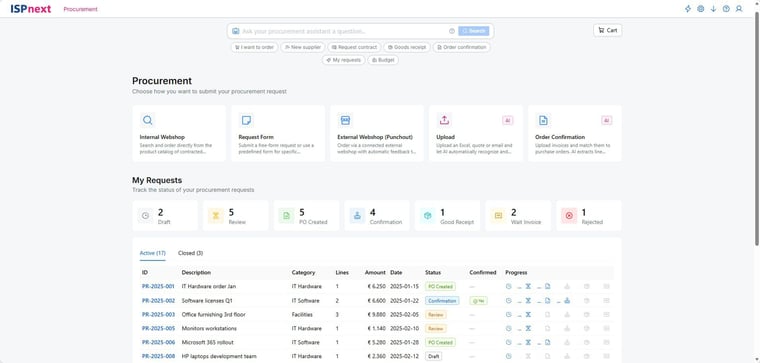
Organisations can often achieve improvements in control, approval management and invoice processing through a well-structured Procure-to-Pay approach. See how procurement software supports structured requests, orders and approvals.
Signs your organisation has outgrown Procure-to-Pay
Many organisations start with Procure-to-Pay and later discover that supplier management, contract governance and sourcing activities have become increasingly difficult to manage separately.
You may have outgrown a Procure-to-Pay approach if:
- Supplier information is stored across multiple systems
- Contract data is difficult to locate
- Procurement lacks visibility into supplier performance
- Multiple business units use different sourcing processes
- Finance teams struggle to understand total spend across suppliers
- Compliance and risk requirements continue to increase
In these situations, a Source-to-Pay approach often provides the structure needed to improve visibility, governance and control.
When Source-to-Pay delivers more value
As organisations grow, procurement challenges become more complex. Multiple suppliers, contract obligations, compliance requirements and sourcing activities create additional layers of risk and opportunity.
Many organisations initially view Source-to-Pay as a procurement project. In practice, the biggest gains often come from connecting procurement, finance and supplier information into a single decision-making framework.
A Source-to-Pay approach becomes increasingly valuable when organisations need:
- Better spend visibility
- Stronger supplier governance
- Improved sourcing outcomes
- Greater contract compliance
- More accurate supplier performance insights
- Better risk management
- End-to-end procurement transparency
Rather than treating sourcing, procurement and Accounts Payable as separate activities, Source-to-Pay connects them into a single process framework. This creates greater visibility across supplier relationships, contracts, purchasing activities and organisational spend.
This creates a stronger foundation for decision-making and long-term procurement performance.
Source-to-Pay in 7 Steps
Many organisations start by improving Procure-to-Pay processes but later struggle with supplier visibility, sourcing decisions and contract control.
Discover how leading organisations connect sourcing, procurement, contract management and Accounts Payable into one integrated Source-to-Pay approach.
Why the difference matters for CFOs and CPOs
The distinction between Source-to-Pay and Procure-to-Pay is not simply a matter of terminology.
It directly affects how organisations manage spending, suppliers and financial performance.
For CFOs
Finance leaders require visibility into spending commitments, liabilities and supplier relationships.
While Procure-to-Pay improves transactional control, Source-to-Pay provides a broader view of how supplier decisions impact financial performance.
This allows CFOs to make more informed decisions about spend optimisation, compliance and risk management.
For CPOs
Chief Procurement Officers are increasingly expected to deliver measurable business value.
Source-to-Pay enables procurement leaders to look beyond purchase orders and payments by incorporating sourcing decisions, supplier performance and contract outcomes.
This creates a stronger link between procurement strategy and business objectives.
For procurement teams
Procurement professionals often spend significant time managing supplier information across disconnected systems.
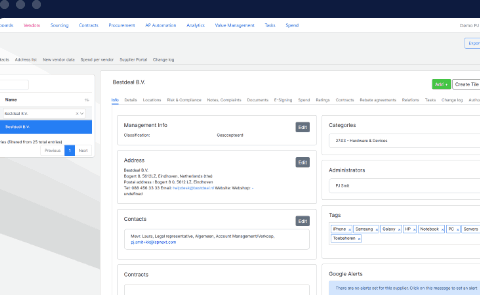
A Source-to-Pay approach helps connect sourcing, contracts, procurement and supplier management activities, creating a more consistent and efficient process. With Vendor Management, supplier data, performance and risk sit in one place.
From process efficiency to Source-to-Pay control
Over the years, many organisations have focused heavily on improving Procure-to-Pay efficiency. Procure-to-Pay automation, workflow optimisation and digital invoice processing have helped reduce manual work and improve operational performance.
However, today’s challenges increasingly require broader visibility and control.
Questions such as:
- Which suppliers create the most value?
- Which contracts deliver expected results?
- Where are the biggest sourcing opportunities?
- Which suppliers present the highest risk?
Cannot be answered through Procure-to-Pay processes alone.
These questions require a Source-to-Pay perspective.
When sourcing, contracts, procurement, supplier management and finance processes operate together, organisations gain a more complete view of their spending landscape.
This enables better decision-making, stronger governance and more strategic procurement outcomes.
The future of procurement is connected
The evolution from Procure-to-Pay to Source-to-Pay reflects a broader shift in the role of procurement. Historically, procurement teams were primarily measured on transactional efficiency and cost savings. Today, organisations increasingly expect procurement to contribute to innovation, resilience, sustainability and competitive advantage. At the same time, supplier networks are becoming more complex, regulations continue to evolve and businesses are under growing pressure to improve visibility and control across their spending landscape.
Across Europe, organisations are responding by connecting sourcing, supplier management, contract management, procurement and finance processes into a more integrated operating model. Rather than focusing solely on purchasing efficiency, leading organisations are using Source-to-Pay to improve supplier governance, strengthen compliance, reduce risk and create long-term business value. In this environment, Source-to-Pay provides the framework needed to support more strategic procurement operations. This is where procurement orchestration comes in. Instead of running sourcing, contract management, purchasing and invoice processing in separate tools, a Source-to-Pay platform orchestrates them across departments: information from one step is available in the next, and every team works from the same supplier and contract data. That connection is also what makes insights possible that a fragmented application landscape cannot provide. Discover how the ISPnext Source-to-Pay platform connects these processes.
Final thoughts
Procure-to-Pay and Source-to-Pay are closely connected, but they serve different purposes.
Procure-to-Pay focuses on executing purchases efficiently and ensuring suppliers are paid correctly. Source-to-Pay takes a broader view by incorporating sourcing, supplier relationships and contract management into the procurement process.
For organisations focused primarily on operational efficiency, Procure-to-Pay may be sufficient.
For organisations seeking greater visibility, stronger control and more strategic procurement outcomes, Source-to-Pay offers a more comprehensive approach.
Understanding the difference allows procurement and finance leaders to make better decisions about how they structure processes, manage suppliers and create long-term value.