

E-invoicing is rapidly becoming a standard part of business operations across Europe. As organisations face increasing digitalisation requirements, evolving compliance obligations and growing pressure to improve efficiency, selecting the right e-invoicing platform has become an important strategic decision.
Why demand is growing
Many organisations are moving away from PDF-based invoice processing and embracing structured electronic invoicing. Beyond compliance, e-invoicing enables faster processing, fewer errors, improved visibility and a stronger foundation for automation.
What this guide covers
This article highlights five well-known e-invoicing platforms commonly used by organisations operating across Europe and outlines the key criteria finance and procurement teams should consider when evaluating a solution.
The key takeaway
There is no universal "best" e-invoicing platform. The right solution depends on your organisation's compliance requirements, geographic footprint, ERP landscape and broader automation strategy.
A common mistake when selecting e-invoicing software
Many organisations begin their e-invoicing journey with compliance as the primary objective. While compliance is important, focusing exclusively on regulatory requirements can result in a short-term solution that creates limitations later.
In practice, the greatest value often comes from automation, integration and visibility. Organisations that evaluate e-invoicing purely as a compliance project may miss opportunities to streamline invoice processing, improve supplier collaboration and create a stronger foundation for future finance transformation initiatives.
Why e-invoicing software matters
The role of e-invoicing has evolved significantly over the past few years.
Originally viewed primarily as a compliance requirement, electronic invoicing is increasingly becoming a catalyst for broader finance transformation initiatives. Organisations are looking beyond regulatory obligations and focusing on the operational benefits of digital invoice processing.
For many organisations, e-invoicing begins as a response to regulatory developments. However, once structured invoice data becomes available, finance teams often discover wider opportunities to improve approval workflows, reduce manual intervention and gain greater visibility into Accounts Payable performance.
As a result, organisations increasingly see e-invoicing as part of a broader process improvement strategy rather than a standalone compliance initiative.
Modern e-invoicing solutions help organisations:
Exchange invoices securely and electronically
Reduce manual invoice processing
Improve invoice accuracy
Increase auditability and compliance
Accelerate approval workflows
Improve visibility into Accounts Payable processes
Beyond efficiency improvements, structured electronic invoicing helps organisations create greater control, auditability and transparency across financial processes.
At the same time, more European countries continue to introduce e-invoicing requirements and reporting obligations. As a result, many organisations are actively evaluating how future-proof their current invoicing processes really are.
E-invoicing is no longer simply about sending invoices electronically. It is increasingly about creating a scalable, compliant and automated invoicing ecosystem.
What to look for in an e-invoicing platform
Before selecting a platform, organisations should understand which capabilities are most important for their business.
Peppol connectivity
For many European organisations, Peppol has become a critical component of electronic invoice exchange.
A platform should support secure and reliable connectivity to the Peppol network while simplifying the exchange of structured invoice data.
ERP integrations
An e-invoicing platform should integrate smoothly with existing ERP and financial systems.
Common considerations include:
- SAP
- Microsoft Dynamics
- Unit4
- Infor
- Oracle
- Exact
- AFAS
The better the integration, the less manual intervention is required.
Compliance support
Requirements continue to evolve across Europe.
A good platform should help organisations manage changing regulations, invoice formats and reporting obligations without requiring significant manual effort.
Accounts Payable automation
The greatest value often comes when e-invoicing is combined with broader invoice automation processes that improve control, reduce manual intervention and increase visibility throughout the Accounts Payable lifecycle.
Look beyond invoice transmission and evaluate how a solution supports:
- Invoice validation
- Matching
- Approval workflows
- Digital archiving
- Reporting
Scalability
Organisations should consider not only today's requirements but also tomorrow's growth plans.
A platform should be capable of supporting:
- Additional entities
- New countries
- Growing invoice volumes
- Future compliance requirements
User experience
Technology should simplify processes rather than create additional complexity.
Ease of use remains an important success factor for adoption and long-term value.
Common selection mistakes
Selecting an e-invoicing platform is not simply a technology decision. It affects finance processes, supplier collaboration and future compliance readiness.
Some of the most common mistakes organisations make include:
- Choosing a platform based solely on current compliance requirements
- Underestimating ERP integration complexity
- Overlooking future country expansion plans
- Ignoring Accounts Payable automation opportunities
- Focusing on invoice exchange while neglecting workflow efficiency
- Selecting a solution that cannot scale with organisational growth
The most successful organisations evaluate e-invoicing as part of a broader finance and procurement strategy rather than treating it as a standalone project.
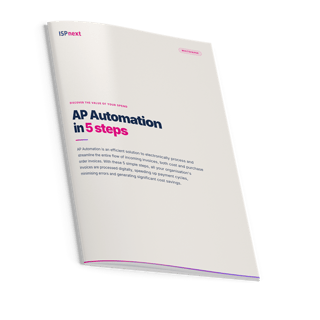
Comply with E-Invoicing in 5 Steps
Preparing for e-invoicing involves more than selecting a platform. Discover how organisations can create a compliant and future-proof e-invoicing process while improving efficiency and visibility.
Not all e-invoicing platforms serve the same purpose
Although e-invoicing providers are often grouped together, they do not all focus on the same challenges.
Broadly speaking, most platforms specialise in one or more of the following areas:
Compliance and invoice exchange
These platforms focus primarily on secure invoice transmission, regulatory compliance and connectivity to networks such as Peppol.
ERP and system integration
Some providers specialise in connecting complex ERP environments and managing the flow of financial data between systems.
B2B connectivity
These platforms often support a broad range of electronic business documents beyond invoices, including purchase orders and order confirmations.
Accounts Payable automation
Certain providers position e-invoicing as part of a wider invoice automation strategy that includes validation, matching and approval workflows.
Understanding these differences helps organisations identify which type of platform best aligns with their objectives and operating model.
Organisations should therefore evaluate whether e-invoicing is an isolated compliance initiative or part of a broader finance and procurement optimisation strategy.
Five leading e-invoicing platforms for mid-sized businesses
The platforms below are listed alphabetically and represent some of the most widely recognised e-invoicing providers operating across Europe.
The best choice will always depend on your specific requirements, business processes and technology landscape.
1.Descartes
Descartes offers a broad portfolio of digital business document exchange solutions and has built a strong presence in global B2B connectivity.
Strengths
- Extensive global network
- Strong international capabilities
- Broad document exchange functionality
- Suitable for complex business ecosystems
Best suited for
Organisations operating internationally that require extensive connectivity across multiple countries and trading partners. Descartes is often considered by organisations that already operate in complex international supply chains and require broad document exchange capabilities beyond invoicing alone.
Considerations
The breadth of capabilities may exceed the needs of organisations seeking a more focused e-invoicing solution.
2.Pagero
Pagero is one of the most established names in the European e-invoicing market and supports a large international network.
Strengths
- Global compliance coverage
- Strong international presence
- Broad invoice exchange capabilities
- Well-established network ecosystem
Best suited for
Mid-sized and enterprise organisations operating across multiple countries. Many multinational organisations choose Pagero because of its extensive compliance coverage and international network, particularly when operating across multiple countries with varying invoicing requirements.
Considerations
Broader functionality often means more complexity during evaluation and implementation.
3.Routty
Routty focuses on enabling compliant and reliable electronic invoice exchange through strong connectivity and automation capabilities.
Strengths
- Multi-country compliance focus
- Peppol connectivity
- Reliable invoice exchange infrastructure
- Supports broader invoice automation ambitions
Best suited for
Organisations looking to combine compliant electronic invoicing with efficient Accounts Payable processes. Routty is frequently considered by organisations looking for a practical combination of compliance, connectivity and automation without introducing unnecessary complexity into existing finance processes.
Considerations
Evaluation should take place alongside broader finance process requirements and automation goals.
4.Seeburger
Seeburger is known for its enterprise integration expertise and strong capabilities in complex B2B integration environments.
Strengths
- Extensive integration experience
- Strong EDI capabilities
- International footprint
- Suitable for complex ERP environments
Best suited for
Organisations with sophisticated integration requirements and large-scale information exchange needs. Seeburger is particularly relevant for organisations where e-invoicing forms part of a wider integration strategy involving multiple business systems and document flows.
Considerations
Particularly attractive for businesses where integration plays a central role in digital transformation initiatives.
5.Storecove
Storecove has built a reputation around connectivity, compliance and API-driven integration capabilities.
Strengths
- Broad compliance support
- Strong API capabilities
- International connectivity
- Flexible integration options
Best suited for
Organisations seeking modern integration approaches alongside broad e-invoicing support. Storecove is often selected by organisations seeking flexibility and modern API-driven connectivity within fast-moving digital transformation programmes.
Considerations
Technical evaluation is often an important part of the selection process.
Which e-invoicing platform is right for your organisation?
Selecting an e-invoicing platform is about more than exchanging invoices electronically. The most successful e-invoicing projects are rarely technology projects alone. Organisations that achieve the greatest long-term benefits typically align finance, procurement and IT stakeholders before platform selection begins.
This helps ensure that compliance requirements, process efficiency goals and integration needs are considered together rather than in isolation.
The selection process should balance compliance requirements with long-term objectives such as process control, scalability, visibility and operational efficiency.
Modern organisations increasingly evaluate how e-invoicing supports wider objectives such as:
- Compliance readiness
- Accounts Payable automation
- Process standardisation
- Supplier collaboration
- Spend visibility
- Digital transformation
The most successful implementations typically connect e-invoicing with broader finance and procurement processes, creating greater visibility, control and consistency across the Source-to-Pay lifecycle.
This creates greater visibility, control and efficiency throughout the invoice lifecycle.
Rather than evaluating providers solely on invoice exchange functionality, organisations should consider how an e-invoicing platform fits within their wider financial and operational landscape.
The future of e-invoicing
Electronic invoicing is becoming a permanent fixture within modern finance operations.
As adoption increases across Europe, organisations are increasingly moving from isolated compliance projects towards integrated digital invoicing strategies.
Future developments are likely to focus on:
- Greater automation
- Enhanced compliance reporting
- AI-driven invoice processing
- Increased interoperability
- Broader connectivity across procurement and finance processes
As e-invoicing becomes more widely adopted, the distinction between invoice exchange and invoice automation is gradually disappearing. Organisations increasingly expect platforms to support not only invoice transmission but also validation, workflow automation, reporting and financial visibility.
The conversation is therefore shifting from "How do we comply?" to "How do we use structured invoice data to improve financial performance?" This broader perspective is likely to shape the next phase of e-invoicing adoption across Europe.
Organisations that invest early in scalable and flexible solutions will be better positioned to adapt as requirements continue to evolve.