

Learn how vendor rating helps measure and improve supplier performance, why evaluations matter and how to set up an effective vendor rating system.
Performance made measurable
Vendor Rating turns supplier performance into figures you can compare.
Hard and soft data
Delivery times and quality count alongside the experience of users.
A basis for the conversation
A score makes the review concrete instead of impressionistic.
Vendor Rating is an essential method for modern procurement teams to measure and improve supplier performance in a structured way. In ongoing contract relationships a great deal is recorded, yet not everything is actively monitored. Supplier information becomes scattered, experiences remain subjective, and real performance insights are often missing. With a structured vendor rating system, supported by digital tools such as Vendor Management and Vendor Rating, organisations gain an objective view of supplier performance and a solid foundation for improvement.
Vendor Rating makes it clear whether a supplier delivers what has been agreed and enables organisations to make timely adjustments. As Dirk Jan, Product Managee at ISPnext stresses: “Vendor Rating must be carried out periodically in order to get as complete and objective a picture as possible.”
What is Vendor Rating?
Vendor Rating refers to the periodic assessment of suppliers based on predefined criteria. It goes beyond traditional supplier evaluation, which is often reactive. A vendor rating system includes both quantitative data such as delivery reliability, pricing accuracy and invoice-order matching, and qualitative criteria such as communication, problem-solving ability and service quality.
“Through digital modules such as Vendor Rating within the Vendor Management solution, assessments are centrally captured. Internal feedback and performance data are combined to provide full visibility into how well a supplier meets contractual obligations,” Dirk Jan says.
Vendor Rating replaces subjective opinions with objective data that can be directly linked to contract agreements, KPIs and supplier performance.
Whitepaper: Vendor Management in 5 steps
This whitepaper shows you how to take the right steps to ensure centralised management, better compliance with agreements and more value from every collaboration.
Why start with supplier evaluation now?
Vendor Rating offers multiple strategic benefits:
- Transparent performance insight
Objective and repeatable assessments create a shared understanding of quality and reliability. - Stronger basis for evaluation and relationship management
Periodic, well-supported evaluations provide solid input for supplier conversations. - Risk reduction
Issues such as delivery failures, quality problems or financial risks become visible earlier and are addressed faster. - Professionalisation of procurement
The procurement function works data-driven and gains a stronger position towards leadership and internal stakeholders.
Dirk Jan also sees the value increasing in practice: “Vendor Rating gives you control over performance and builds strong supplier relationships.” Rating is therefore not merely a method of assessing suppliers but a strategic instrument for steering relationships.
How to rate suppliers: methods and metrics
Supplier performance is measured using both objective KPIs and subjective experiences. Commonly used metrics include:
- Delivery reliability
- Product or service quality
- Price and price stability
- Invoice and order matching
- Communication and responsiveness
- Innovation capability and willingness to improve
- Sustainability criteria (where applicable)
With Vendor Management you can easily create surveys, select question types (scales, numerical scores, comment fields), assign respondents and monitor progress. This creates a consistent supplier rating that can be compared across periods, suppliers and categories.
“Without proper contract management, agreements are forgotten and risks remain invisible.”
 Dirk Jan LeppersProduct Manager | ISPnext
Vendor Rating software: Automating supplier assessment
A strong vendor rating system includes the following components:
- Clear assessment criteria
Define the performance indicators relevant to your organisation and per supplier category.
- Involving stakeholders
Collect feedback from employees who work directly with the supplier. Their experience complements hard data.
- Digital support through tooling
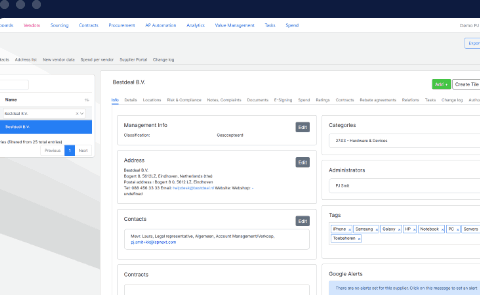
Using the Vendor Management solution from ISPnext, including Vendor Rating and the Supplier Portal, supplier assessments are fully digital, including survey management, dashboards and reporting.
- Dashboards and reporting
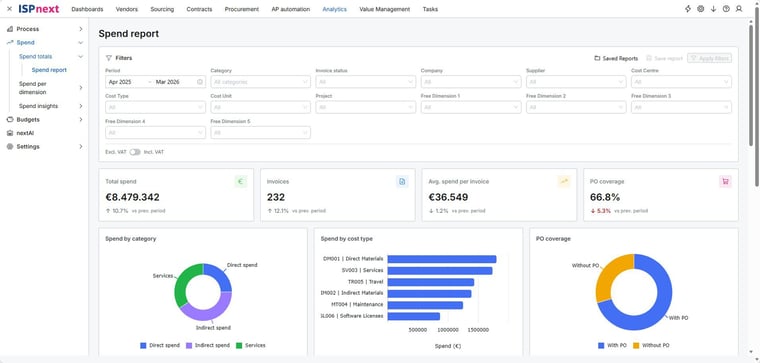
Performance is visualised through scorecards, category matrices and KPI dashboards. These insights can be shared with colleagues and suppliers via the Supplier Portal.
From insight to action: Improving supplier relationships
Vendor Rating not only measures performance but also strengthens collaboration with suppliers. With clear insights into strengths and improvement areas you can:
- Improve communication
- Increase transparency
- Adjust contract agreements
- Set targeted improvement actions
- Monitor KPIs over time
- Steer on long-term partnership goals
This creates a more balanced, professional relationship that benefits both sides.
Frequently asked questions
The purpose of vendor rating is to provide organisations with a structured and objective approach to assessing supplier performance. A well-designed vendor rating system allows you to measure aspects such as quality, delivery reliability, service and responsiveness in a consistent way. This creates transparency, highlights areas for improvement and supports better decision-making across procurement. In the long term, vendor rating helps strengthen supplier relationships, reduce risks and improve overall performance within the supply chain.
When organisations evaluate suppliers, the most important criteria usually relate to the factors that influence operational stability and strategic value. In supplier evaluation, delivery reliability plays a key role, because it shows how consistently a supplier meets agreed timelines and quantities. Quality is equally important, as it reflects compliance with specifications and the rate of defects or complaints. Cost and value also matter, including price stability and long-term cost efficiency. Communication and service are crucial for smooth collaboration, and sustainability and compliance increasingly influence how organisations choose and evaluate suppliers. Together, these criteria provide a balanced view of supplier performance.
Vendor rating software supports organisations by automating the entire supplier assessment process. A digital vendor rating system guides users through surveys, questionnaires and structured evaluations, while collecting performance data in a central location. It tracks key KPIs in real time, such as delivery accuracy, quality metrics and service levels, and presents them in clear dashboards and reports. This combination of data-driven insights and automated workflows makes supplier management more consistent, transparent and efficient.
There is increasing urgency to evaluate suppliers due to growing supply chain risks, stricter compliance requirements and rising expectations from customers and stakeholders. A structured supplier evaluation process helps organisations uncover performance issues earlier, maintain quality standards and reduce exposure to risk. It also enables procurement teams to make more strategic decisions, strengthen collaboration with suppliers and achieve long-term improvements in cost, quality and sustainability. Starting now ensures that your organisation gains immediate control over supplier performance and future-proofs its procurement strategy.
Although the terms are related, supplier evaluation and vendor rating are not identical. Supplier evaluation is the broader concept and can include qualitative assessments, audits, compliance checks and strategic considerations. Vendor rating, in contrast, focuses specifically on structured scoring based on measurable performance indicators and predefined criteria. In practice, vendor rating forms part of the overall supplier evaluation process, providing the quantitative foundation that supports data-driven decision-making and performance management.