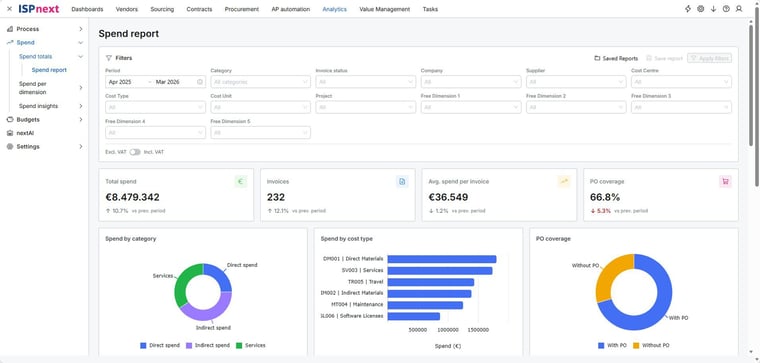


Understanding expenses helps you identify savings opportunities and improve financial control.
Without an overview
Without central visibility on spend, savings and risks stay unnoticed.
Data as the basis
Standardised spend data makes steering and reporting possible.
Finance and procurement
Both departments work from the same figures and the same definitions.
For any organisation, costs are an integral part of everyday work. But knowing exactly where that money is going is something quite different from having a real grip on spend. According to John Schouten of ISPnext, insight into spend is indispensable for financial stability, risk management and more informed decisions.
"Without an overview, you sail by feel. And that is rarely enough," states John. By gaining better insight into obligations, suppliers and contract agreements, organisations can make more targeted adjustments and act more strategically.
What does understanding business expenses mean in practice?
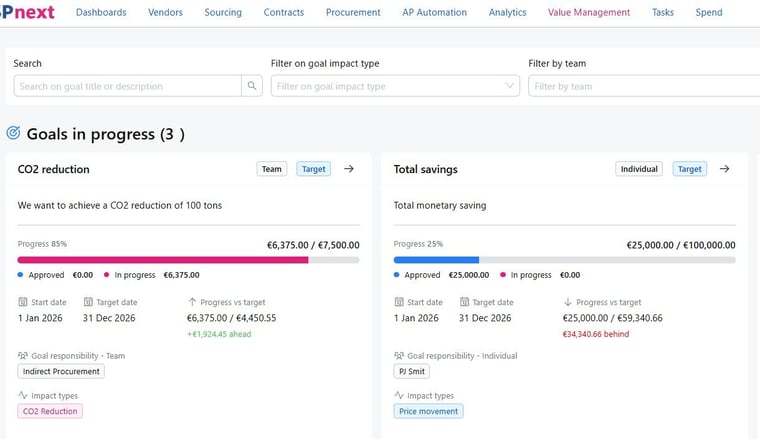
Insight into spending means that, as an organisation, you know in real time what liabilities you have, where money is flowing and whether spending fits within contractual agreements and budgets. This forms the basis for insight into business spending, where every euro is accounted for. "It's not about collecting data, it's about understanding what is happening and why," says John. Financial control starts with transparency.
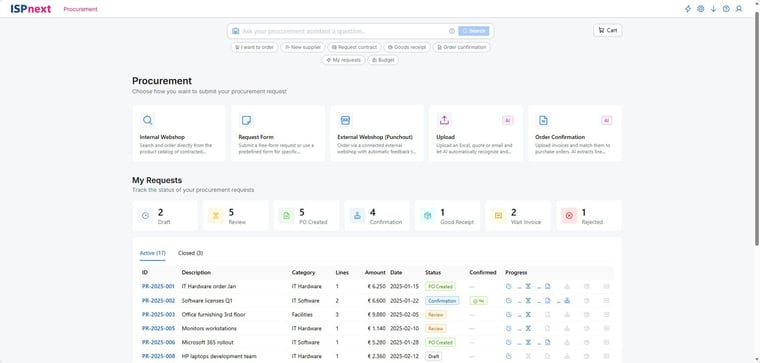
A powerful solution brings together all relevant data: invoices, purchase orders, contracts and approvals. This creates a reliable picture that leads to informed decisions. "You don't want to explain deviations afterwards. You want to recognise them in advance," states John.
Spend Analytics in 5 steps
Discover how to surface savings with reliable spend data.
Understanding expenditure as basis for risk management and financial control
In many organisations, crucial supplier or cost information remains scattered across systems or departments. This creates blind spots. "If you rely on manual overviews or late signals, adjusting is almost impossible," warns John. Good insight helps you spot risks early, be it budget overruns, contract breaches or compliance issues.
Combining all data in one platform creates a control point that continuously monitors. As a result, errors are detected faster and deviations can be discussed immediately with relevant departments.
Without proper spending review, you lose grip and cost control
Without structure in spend data, companies lose track. This leads to duplicate payments, unused contract agreements and unnecessary costs. "We often see companies discovering only after weeks that they are buying from the wrong supplier or that an invoice is not within the agreed rate," says John.
The solution lies in automation and consolidation. Automatically linking contract information, invoice data and orders creates valuable insights. Not only into what is happening, but also into what could be done better.
What does insight into spending and supplier data concretely deliver?
According to John, the benefits are not just financial. "By knowing where your money is going, you can buy more strategically, negotiate more strongly and make processes more efficient." Organisations can count on:
- Faster action on overruns.
- Lower workload through automatic alerts.
- Better collaboration between Finance and Procurement.
- Clarity on supplier performance.
- Greater confidence in decision-making based on up-to-date data.
- Better understanding of staff expenses, such as declarations and hiring.
"Once managers have up-to-date and reliable data at their disposal, confidence and pace is created in the organisation," John emphasises.
Why understanding spending is essential for ESG and compliance
More and more companies have to account for their sustainability goals. Understanding spend is an indispensable building block in this regard. "If you don't know who you are doing business with, you can't manage ESG goals either," John argues. Think about carbon footprint, diversity in the chain or compliance with ethical guidelines.
By linking ESG criteria to supplier and invoice data, sustainable business becomes concrete. And dashboards with up-to-date reporting make it easier to meet external requirements.
“This allowed us to understand contract compliance by company. This gave us a huge efficiency gain.”
 Anton van AarManager Procurement | Vebego
From Excel to central spending analysis and real-time visibility
A common pitfall is that organisations rely on Excel or separate tools for insight. This not only takes time, but also creates errors. "Anyone who needs five Excel files to explain their spend is sitting on a time bomb," John states sharply. The solution lies in central data streams that are automatically enriched and validated.
A smart platform ensures that you instantly see what you need to know without delay or manual work. This allows employees to focus on analysis and action, not administration.
Wondering how Vebego gained full control over their procurement and supplier processes? Read the customer case and find out how they achieved insight into expenses with one central tool.
How technology helps with sustainable financial control
Technology plays a key role in gaining insight. "But technology has to serve the user," says John. User-friendliness, adaptability and overview are prerequisites to really benefit from it.
A modern solution is modular and grows with the organisation. Be it extensions, legislation or updates. A scalable approach ensures that insight into spend does not stagnate as soon as circumstances change.
Insight into staff spending and collaboration between Finance and Procurement
Finally, John stresses the importance of collaboration between departments. "Finance sees the numbers, Procurement knows the suppliers. Only together do you get the full picture." Insight into spend thus becomes a common interest, not just of the controller, but of the entire organisation.
A shared platform makes it easier to consult, share goals and make improvements together. This leads to better returns and more agility in a rapidly changing market.
Wondering how your organisation can get a better grip on spend? Request a demo right away and discover how ISPnext provides clear insight into every step of your financial process.
Frequently asked questions
Cost management focuses mainly on limiting expenditure. Insight into spend goes a step further and revolves around analysing, explaining and steering based on actual data. It is broader and more strategic in nature.
In theory, yes, but in practice you quickly run into limitations such as data contamination, duplication or missing links. An integrated platform prevents insight from getting stuck in spreadsheets or separate tools.
Achieving full insight into spend requires multiple data sources. Think of invoices, purchase orders, contracts, supplier information and budget data. By cleverly linking these data, a complete and reliable overview is created that allows organisations to better steer.
Not just Finance or Procurement. Project managers, contract managers and compliance officers also benefit from central insight. It supports cooperation and speeds up decision-making across departmental boundaries.