
Optimise procurement with digital software for cost savings, compliance and control over suppliers, contracts and spend.
The trigger
Rising costs and stricter requirements make delay expensive.
The gain
Digital procurement delivers savings, compliance and grip on suppliers.
The approach
Start with the phase that has the most manual steps.
At a time when organisations are increasingly demanding transparency, speed and sustainability, optimising the procurement process is gaining urgency. Companies that digitise and standardise their processes achieve substantial benefits in cost control, risk management and compliance. But let's start at the beginning: what does Procurement actually mean?
What is Procurement?
Procurement, also referred to as purchasing or the Procurement process, encompasses all activities surrounding the procurement of products and services that are essential for business operations. It goes beyond procurement. It is about strategic management of suppliers, contracts and budgets.
It is crucial for organisations that these processes run efficiently. Whether you are a Procurement manager looking to add structure or a CPO who wants maximum control over spending, getting a grip on Procurement is the key to success. Modern procurement software helps organisations collaborate better, comply with central agreements and make data-driven decisions. Therein lies the difference between reactive procurement and strategic supplier management.
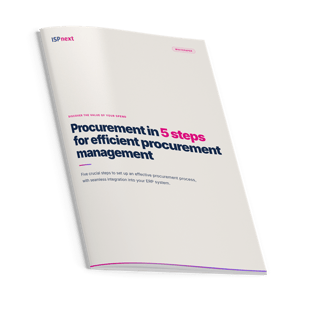
Procurement in 5 steps
Discover how to digitalise the procurement process step by step.
Why you should optimise the procurement process
Optimising the procurement process means striving to make it as efficient, transparent and reliable as possible. This means fewer manual actions, fewer errors and better cooperation between departments and with suppliers. "As soon as you make procurement data centrally available, insights arise that you can really steer on," says Sander Veenstra, Product Manager at ISPnext. "That makes Procurement a strategic tool."
Moreover, a well-designed e-procurement process strengthens your organisation's resilience. In times of supply uncertainty or price fluctuations, clear supplier data ensures faster decision-making. Consider the benefits of automatic approval flows, digital purchase requisitions and real-time matching of invoices with orders.
The benefits of procurement optimisation
An optimised procurement process offers both tactical and strategic benefits:- Cost savings come from reducing maverick buying and obtaining more favourable contract terms. Smart contract management ensures that you are always working with the right agreements.
- Faster turnaround times are possible thanks to automation and the use of procurement software, making approvals and invoice processing much faster.
- Faster turnaround times are possible thanks to automation and the use of procurement software, making approvals and invoice processing much faster.
- Better compliance becomes easier as you can comply with laws and regulations, such as CSRD reporting requirements.
- Data-driven working becomes a reality through a Source-to-Pay platform that offers one truth about all procurement data.
- A more sustainable supply chain becomes achievable because you can test suppliers on ESG criteria and integrate sustainability goals into your procurement strategy.
The phases of an optimised procurement process
The procurement process consists of several stages where optimisation can make a big impact:- Needs analysis starts with internal signalling of procurement needs. Clear alignment prevents uncontrolled spending.
- Supplier selection is based on criteria such as sustainability, reliability and price. A central supplier database helps make choices more transparent and substantiated.
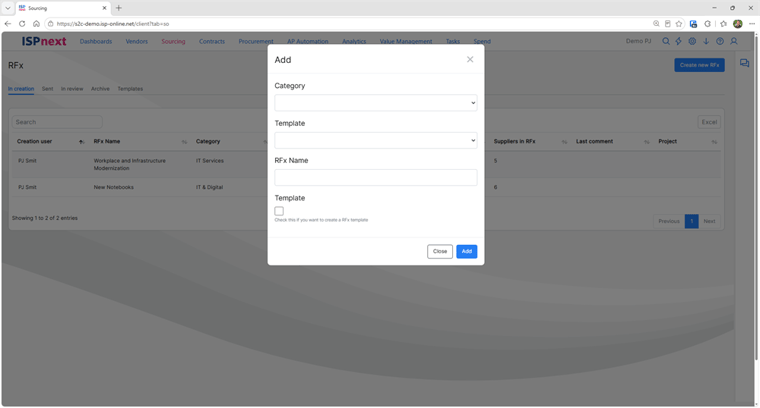
- Contract management is about clear agreements on delivery, price and service levels. Digital contract management solutions ensure grip on durations, obligations and deadlines.
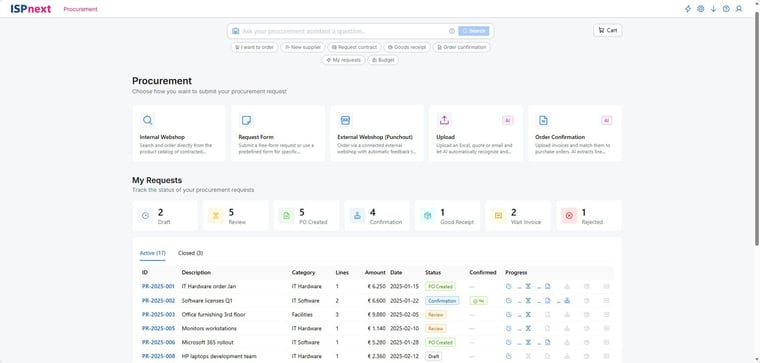
- Ordering and receiving are done digitally via e-procurement tools. This creates consistency and convenience for end users.
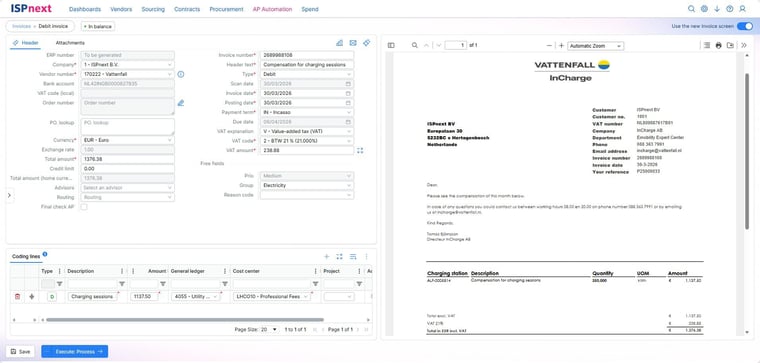
- Invoice processing is automatically linked to orders and receiving, reducing errors and speeding up processing.
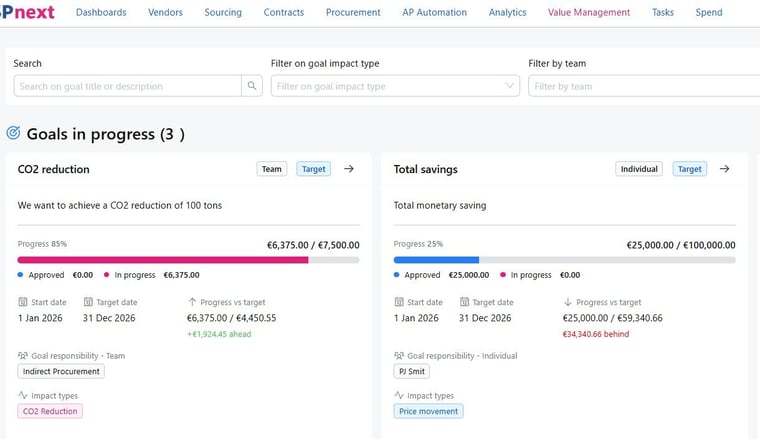
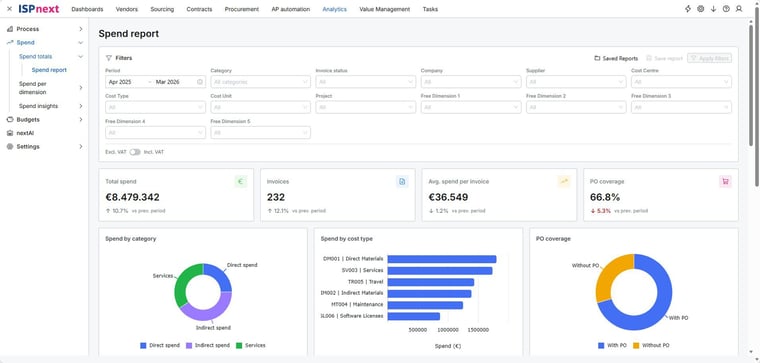
- Monitoring and reporting provide insight into KPIs and supplier performance. Dashboards show real-time trends such as rejection rates or lead times.
A smart procurement platform helps automate and connect these steps. It prevents data from becoming fragmented and ensures that your organisation can steer by facts instead of gut feeling.
Curious how Municipality of Oss uses contract management for joint procurement with surrounding municipalities? Read the customer case and discover their experiences.
“Thanks to ISPnext, we know pretty well what we spend, who spends it and what it is spent on.”
 Peter NederlofInkoopadviseur | Gemeente Oss
Successful implementation of procurement optimisation
A successful implementation starts with a clear vision. Establish what you want to achieve as an organisation and then determine where you can make the most impact. For example, start by digitising invoice processing or contract management. These steps deliver quick results and open the way to further digitisation.
In addition, ensure support. Involve key people such as Finance, Legal, IT and, of course, the Procurement manager. This will prevent the project from getting stuck in just technical implementation.
"Optimisation is not an IT party. The business has to understand it, want it and use it," says Sander. "Only then will you make structural progress." Preferably choose a solution that integrates with your existing ERP system and is scalable to other departments or countries. Think cloud-based platforms that move flexibly with your growth and regulations.
Do you also want to go to the next level?
Is your organisation ready to take the next step in digital maturity? By optimising your procurement process, you not only create efficiency but also value. For now and for the future.Get inspired by our approach and download our white paper quickly. Discover what a future-proof procurement strategy looks like and which advantages you can immediately realise with modern procurement software.
Frequently asked questions
Procurement focuses on order fulfilment and invoice processing. Procurement is broader and includes strategic tasks such as supplier selection, contract management and cost analysis.
Organisations often opt for a Source-to-Pay or e-procurement platform. These systems automate and connect all steps from request to payment and offer integration with existing ERP solutions.
You do this with KPIs such as savings, lead times, PO compliance and supplier performance. These metrics provide insight into efficiency and risk.
Without optimisation, you run the risk of maverick buying, slow processes, compliance issues and higher costs. This affects not only your margins, but also your reputation.