

Discover why CFOs and CPOs are shifting towards a unified procurement suite. Integration improves spend visibility, cost control, and value creation.
Separate tools cost time
Every connection between systems is maintenance nobody wants.
One set of figures
Finance and procurement look at the same numbers instead of their own.
Easier to scale
A cloud suite grows without a new implementation per component.
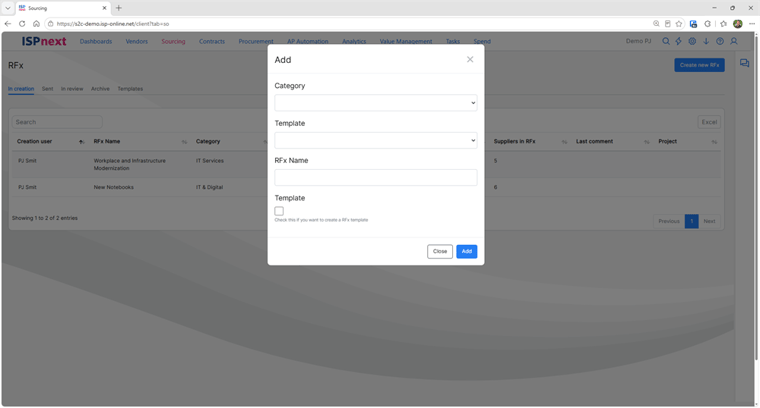
CPOs and CFOs see working with one unified procurement suite as the logical next step in Source-to-Pay. Regulatory pressure is growing, data must be consistent and accessible, and the demand for efficiency and collaboration between Finance and Procurement continues to rise. A single platform brings sourcing, contract management, procurement, and invoice processing together. With one data model and one version of the truth, instantly available for decision-making.
John Schouten, Director Product Management at ISPnext, explains: “Sharing information from different processes on one platform provides insights you simply don’t get from stand-alone solutions.”
The growing demand for integrated Procurement solutions
The CSRD directive requires large organisations to report on the impact of their operations on people and the environment. As a result, companies want to monitor not only their suppliers but also sub-suppliers. While transparency in the supply chain sits mainly with Procurement, ESG reporting often falls under Finance. Consequently, CFOs and CPOs increasingly demand one unified procurement suite with consistent data so that processes and reporting align seamlessly.
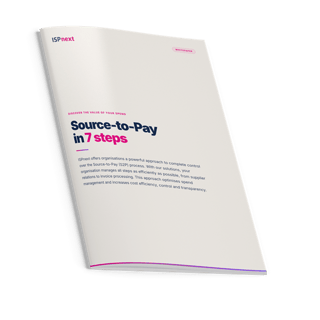
Source-to-Pay in 7 steps
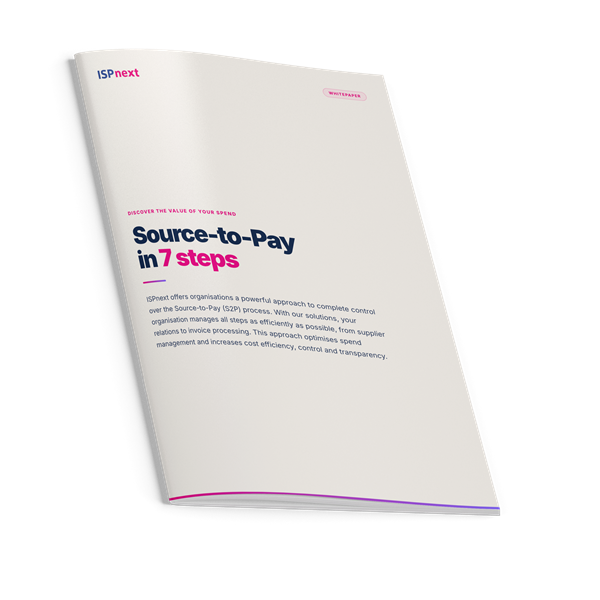
Download our whitepaper Source-to-Pay in 7 Steps and discover how to get more control over spending and realise savings. Get started immediately with practical steps and improve your spend management!
Why CFOs value spend visibility and financial control
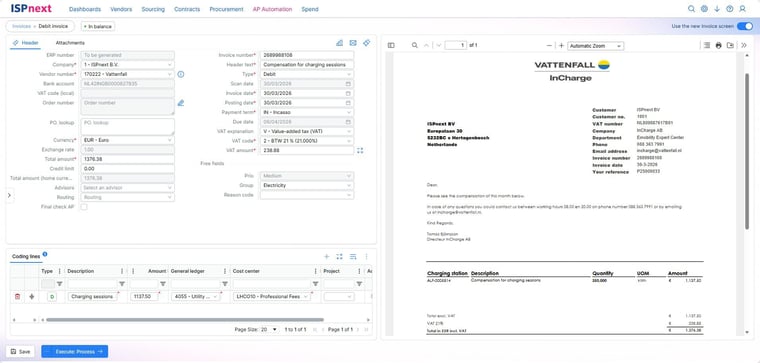
Finance leaders view spend visibility as key to informed decision-making. A single procurement suite connects contract data, purchase orders, and invoices, making cost control measurable across categories. Working in one platform enables Finance to identify risks earlier, improve audit readiness, and strengthen compliance. By integrating Source-to-Pay, CFOs gain the control and transparency that fragmented systems lack.
How CPOs benefit from Procurement digitalisation
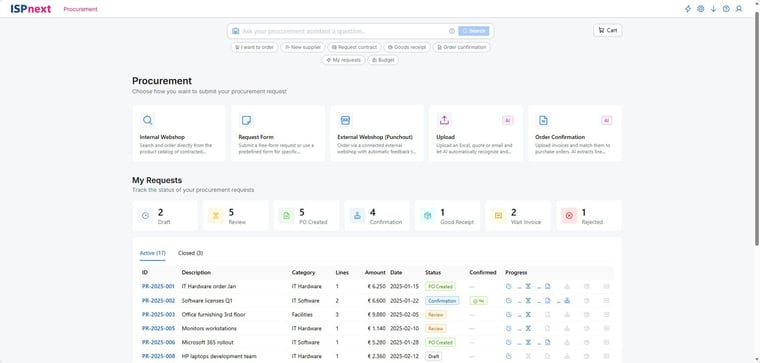
For CPOs, a digitally connected procurement process means more efficiency, fewer manual tasks, and better supplier management. One suite delivers a unified user experience, faster processing times, and cost savings in procurement through automation and insight.
Intelligent features such as contract expiry alerts, supplier data reuse, and benchmarking tools enable continuous optimisation. Turning procurement digitalisation into a strategic asset.
Source-to-Pay as a strategic priority
Fragmented point solutions often lead to inconsistent data. A unified Source-to-Pay approach connects procurement and finance software, bringing spend, contracts, and performance into one context.
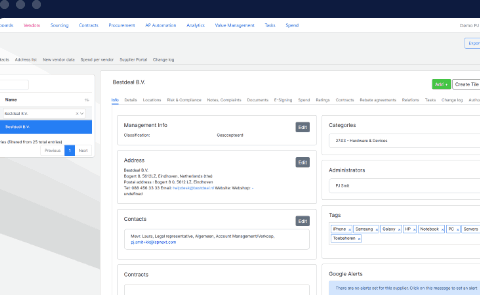
If, for example, Vendor Management flags an issue or certification lapse, Accounts Payable can immediately see it and suspend payments until resolved. The platform then suggests alternative suppliers, safeguarding continuity and compliance.
Aligning Finance and Procurement: a strategic move
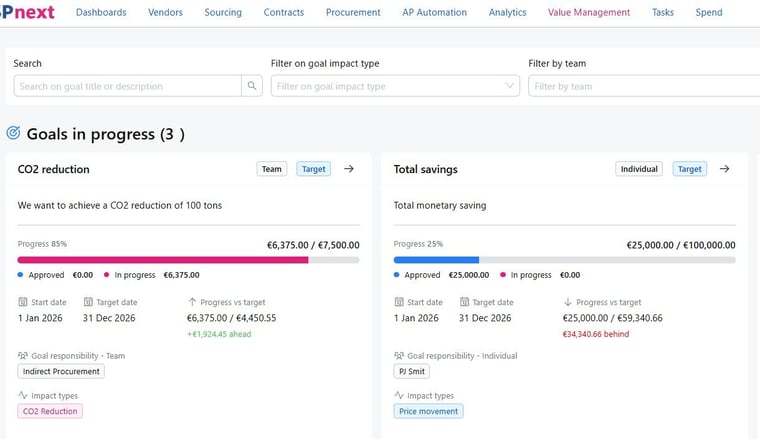
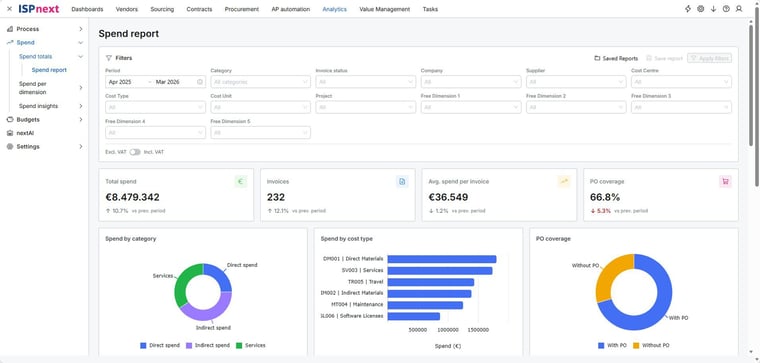
Finance and Procurement now share one data environment with common KPIs and dashboards. This alignment between finance and procurement accelerates matching, approval, and control while reducing friction and ensuring compliance. “Make sure Finance and Procurement work with the same data and perform the same spend analytics,” says John.
Such alignment enables value creation in procurement by transforming collaboration into measurable performance.
“Sharing information from different processes on a single platform provides insights you don't get with stand-alone solutions.”
 John SchoutenDirector Product Management | ISPnext
The ROI of a unified cloud-based Procurement suite
Modern cloud procurement systems exchange data flexibly with ERP and third-party tools. While ERP excels at transactional processing, a Source-to-Pay suite offers the capabilities for sourcing, contract management, and supplier risk monitoring.
Up-to-date information, intuitive user experience, and smooth integrations make digital transformation in procurement achievable in practice. The DORA regulation also highlights, particularly for financial organisations, the need for IT resilience and simplified vendor landscapes.
“A Source-to-Pay platform operates in the cloud and is designed to exchange data flexibly with other systems, including ERP,” notes John. This streamlined setup results in fewer maintenance cycles, lower risk, and faster innovation.
Implementation and adoption: what to consider
Successful software implementation requires a clear goal, phased rollout, and strong change management in procurement. Start with the areas that cause the most friction, link key data fields, and secure adoption through role-specific training.
Given today’s talent shortages and rising workload, standardisation and simplicity are essential. A unified suite reduces complexity, accelerates onboarding, and enables teams to focus on value-driven activities rather than operational firefighting.
Additional context and business case
- Not a replacement but a complement to ERP: the suite extends ERP capabilities with missing Source-to-Pay functionality, ensuring that risk management, compliance, and savings potential are fully realised.
- Bottom-line impact: shared data uncovers saving opportunities hidden within stand-alone tools. Acting on a single version of the truth increases contract compliance and reduces off-contract spend.
Frequently asked questions
An integrated procurement suite is an end-to-end platform that connects all key Source-to-Pay processes in one unified environment. It centralises sourcing, contract lifecycle management, purchasing workflows, supplier management, spend analytics, and invoice processing. Instead of maintaining separate systems with fragmented data, organisations benefit from a streamlined and connected process flow. This improves visibility, ensures consistent data quality, and delivers a frictionless user experience across teams and departments.
CFOs and CPOs increasingly prioritise a single source of truth for Source-to-Pay. A centralised platform consolidates financial and procurement data, enabling both functions to collaborate more effectively and make aligned decisions. It enhances reporting accuracy, reduces manual reconciliation efforts, and strengthens overall governance. With full transparency into spend, commitments, supplier risks, and budget impact, leadership teams can steer the organisation with confidence and agility.
A single suite eliminates the complexity that arises from using multiple disconnected tools. Data silos disappear, manual input is reduced, and workflows accelerate because processes seamlessly transition from one stage to the next. Organisations gain consistent data standards, lower IT maintenance costs, and a modern, scalable system architecture. This unified approach also supports a broader digital procurement strategy, allowing teams to innovate faster and adapt to market changes more effectively.
A procurement suite helps organisations enforce contract terms, increasing contract compliance and reducing maverick spend. Automated workflows and smarter matching capabilities minimise errors and manual rework. Approval cycles become shorter and more efficient, lowering operational costs. Additionally, improved spend visibility and supplier performance insights enable teams to identify saving opportunities, negotiate better agreements, and reduce risk throughout the procurement lifecycle.
A modern solution supports the entire procurement lifecycle with digital tools and automation. Core functionalities include digital purchasing processes, supplier and contract management, intelligent invoice matching, real-time dashboards, and spend reporting. Advanced procurement suites integrate seamlessly with ERP systems and other cloud platforms through APIs, ensuring smooth data exchange. Increasingly, AI-driven insights, automated classification, and predictive analytics are also part of next-generation procurement capabilities.
A successful implementation requires a structured, phased approach aligned with organisational readiness. Clear KPIs and objectives guide the project and help measure progress. Strong change management is essential. Involving stakeholders early, communicating transparently, and offering role-based training ensures smooth user adoption. Starting with foundational modules and scaling up over time allows organisations to stabilise processes while realising continuous value.
Transitioning to a unified suite often means redesigning long-established processes. Change management is therefore a major challenge, as teams must adapt to more standardised and automated workflows. Technically, integrating the suite with existing ERP systems and cleaning or migrating legacy data can be complex. Establishing the right governance, access structure, and data standards is crucial to ensure the system operates effectively and delivers reliable insights.
A unified suite provides real-time visibility across spend, suppliers, risks, and financial commitments. This empowers CFOs and CPOs to make data-driven decisions rather than relying on manual reporting or incomplete datasets. Integrated spend analysis and performance dashboards highlight trends, opportunities, and bottlenecks. As a result, organisations accelerate their digital transformation and improve strategic alignment between finance and procurement.
The ROI comes from a combination of direct and indirect value drivers. Automation reduces manual processing costs, while increased contract compliance leads to immediate savings. Improved risk management lowers financial and operational exposure. Over time, better supplier collaboration and more strategic procurement practices create long-term value across the supply chain. Most organisations experience substantial returns as digitalisation enables more efficient, compliant, and transparent procurement operations.